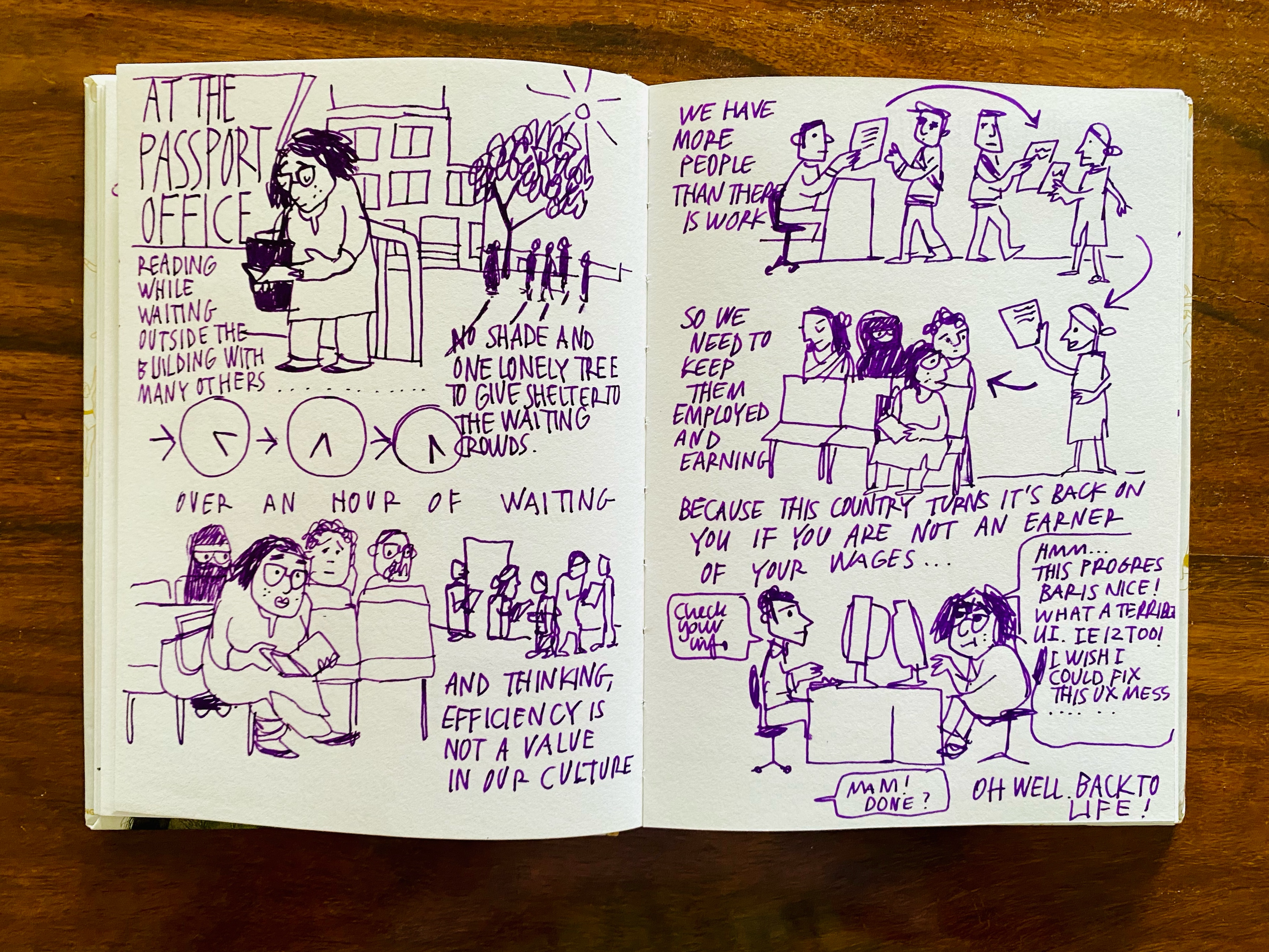
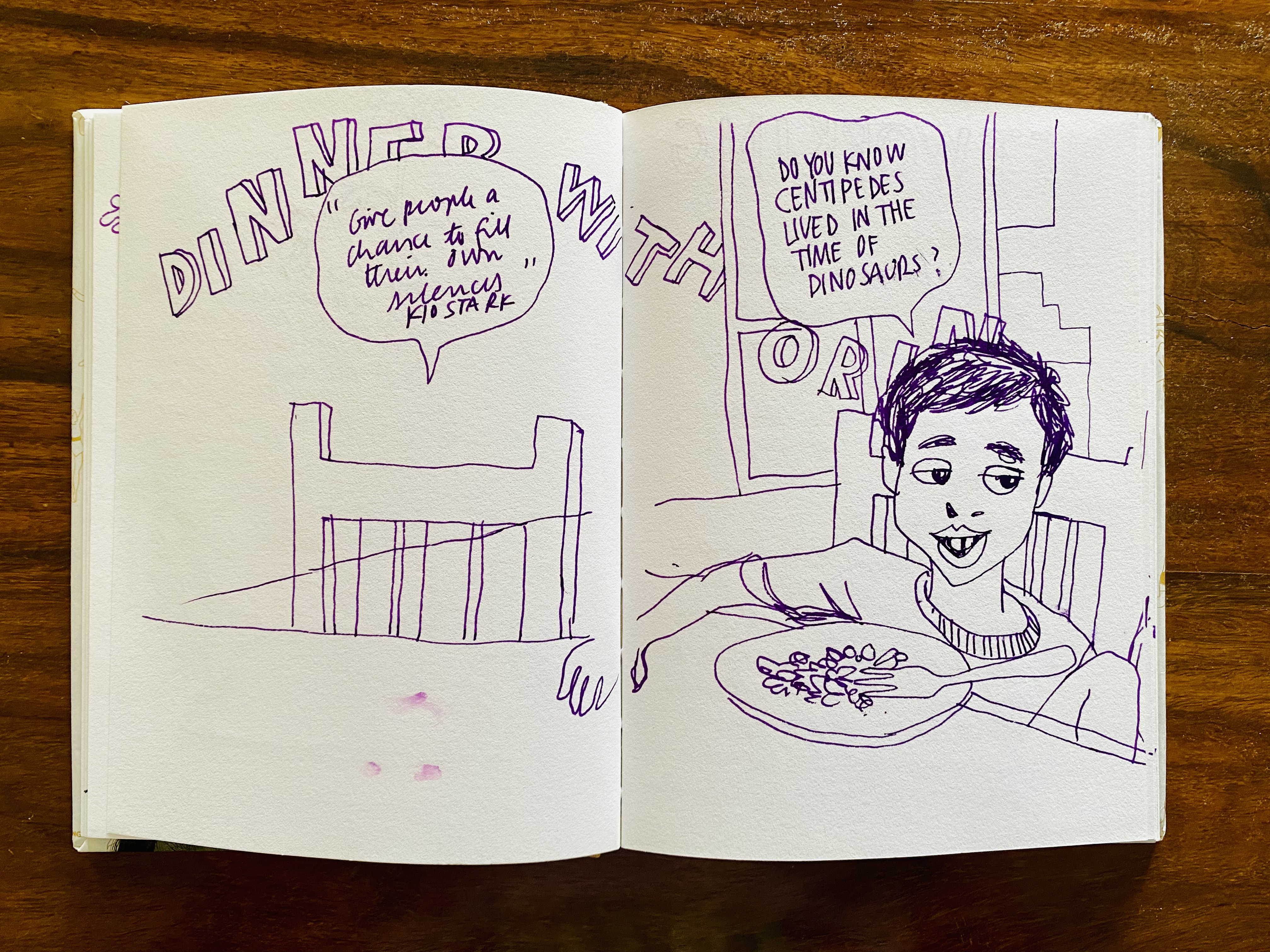
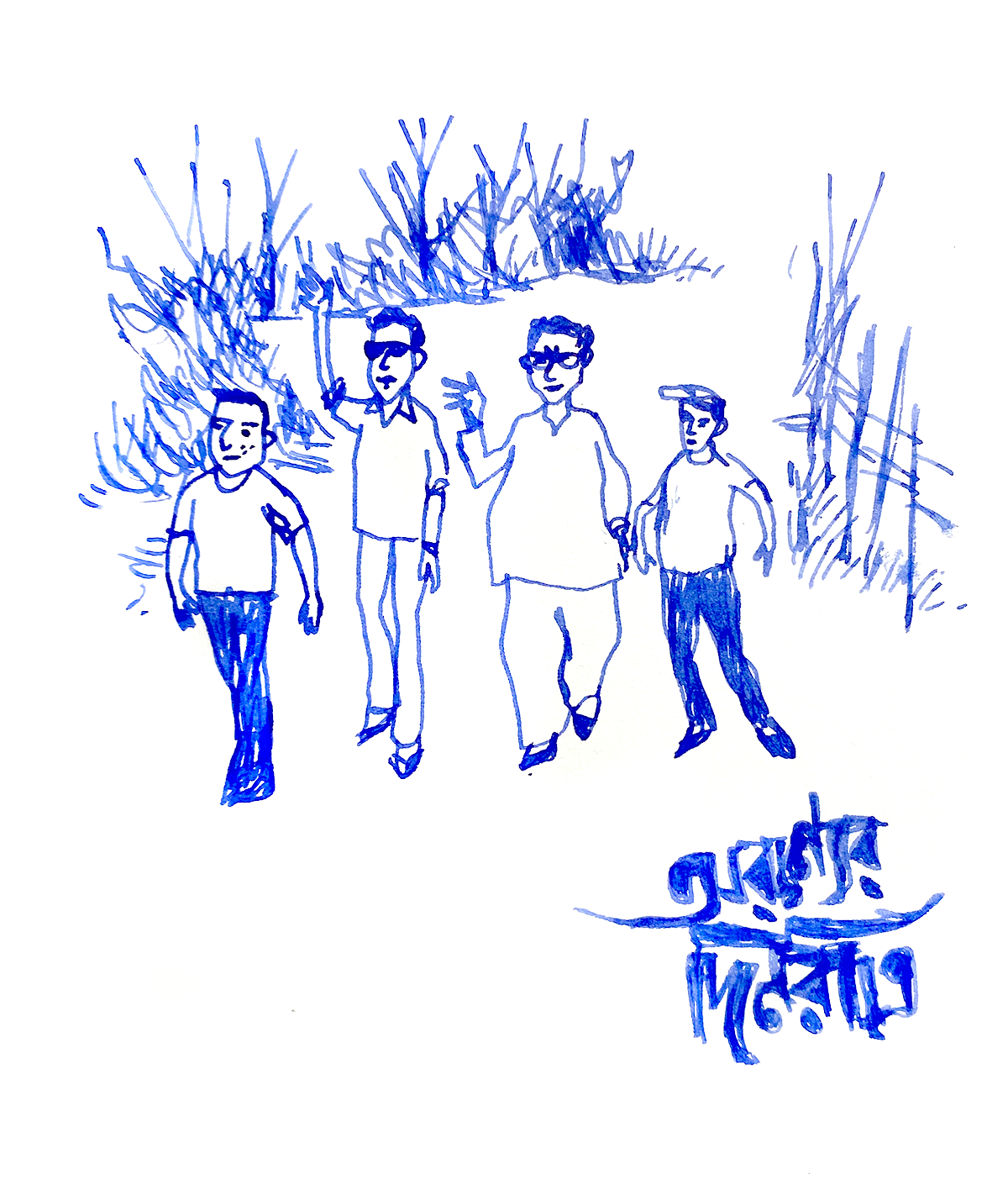
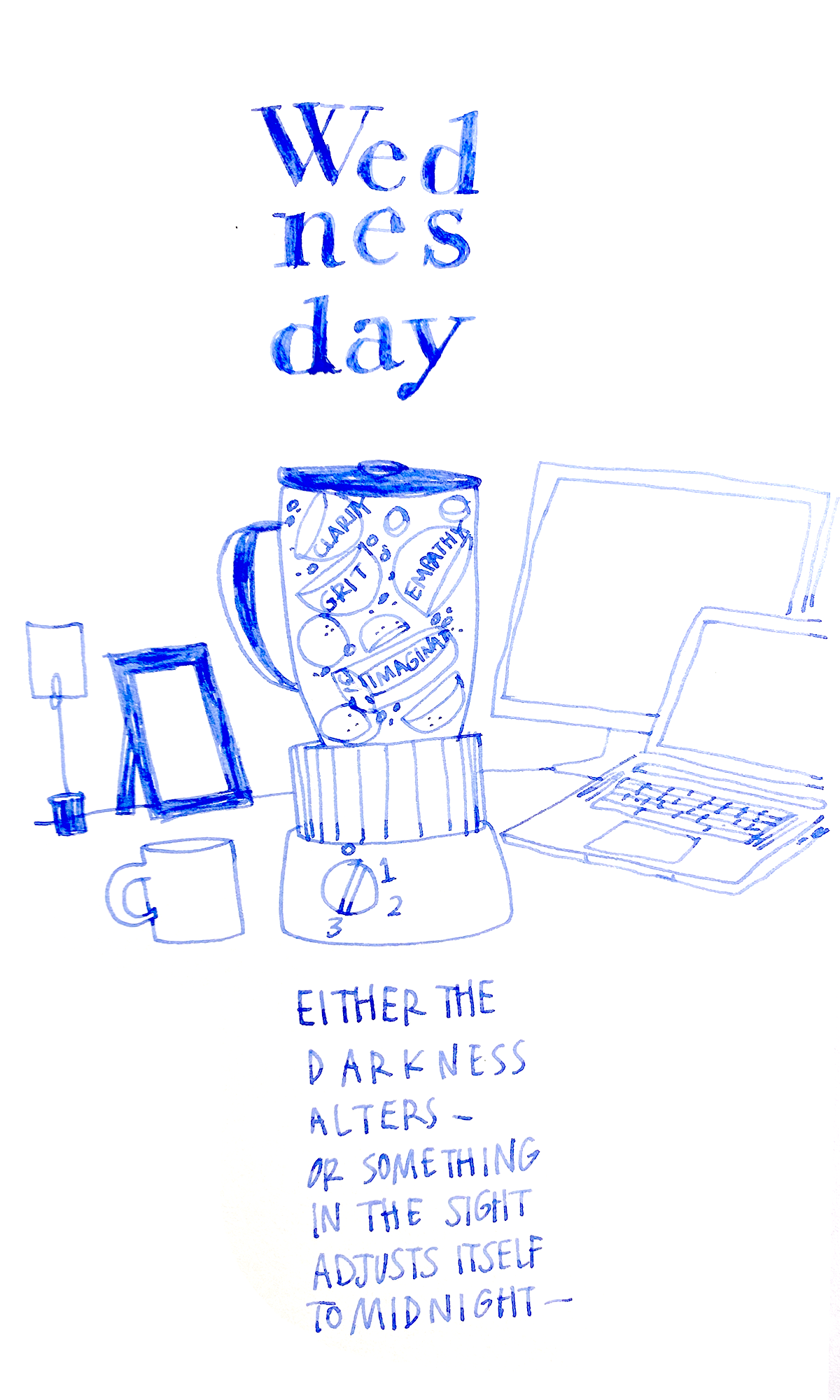
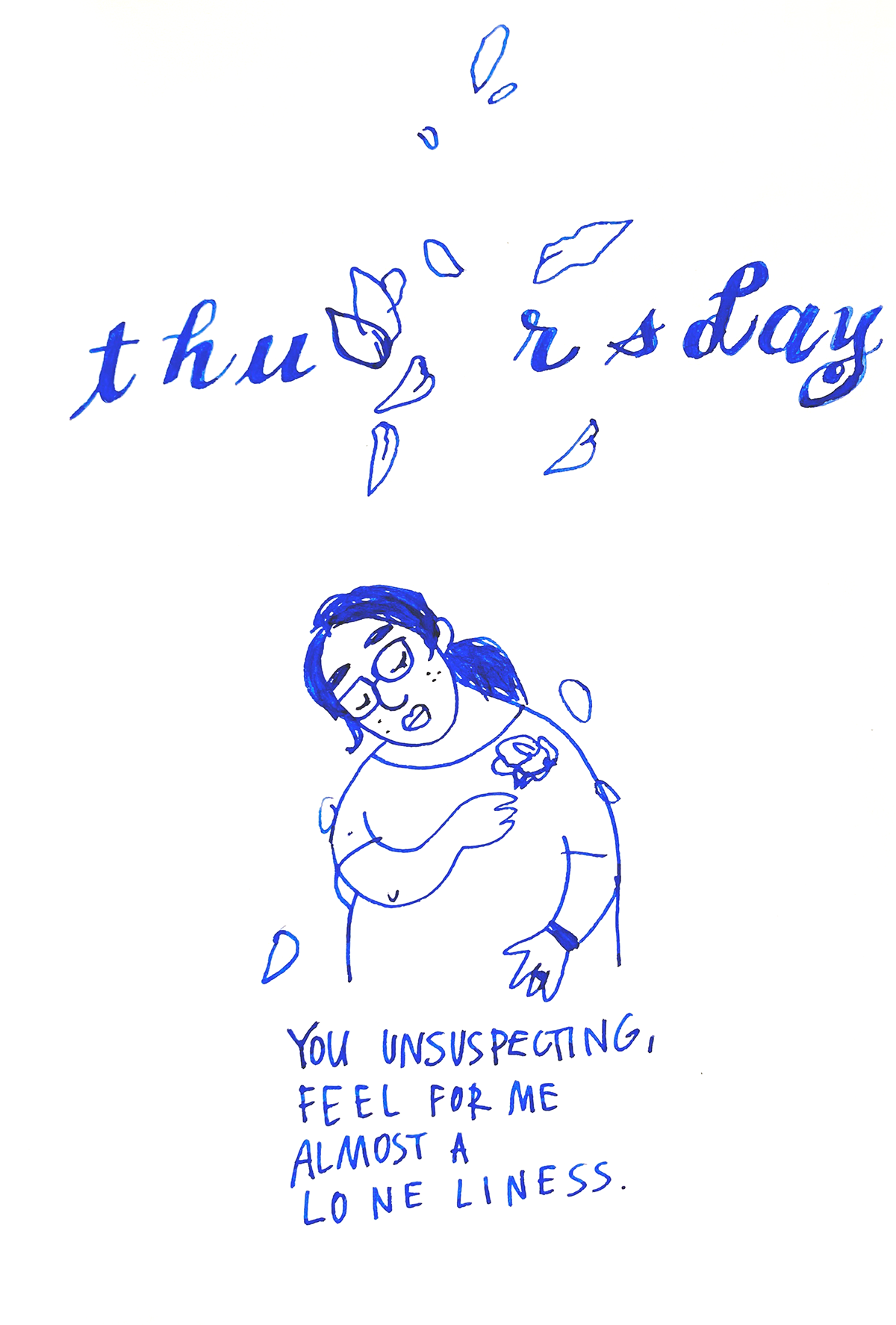
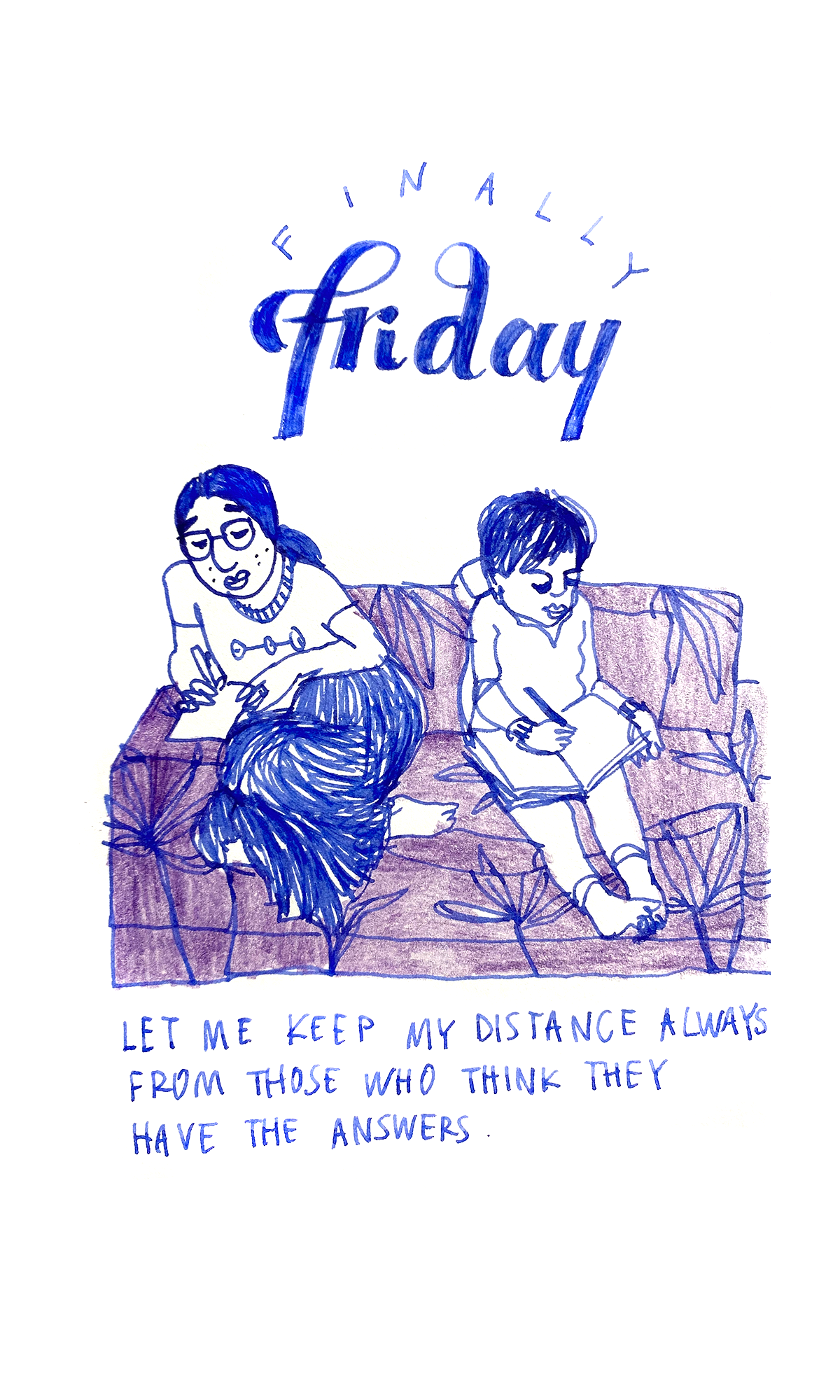
Here are some recent pages from my sketchbook, unedited, unpolished, straight from my mind to the paper, drawn in usually less than fifteen minutes.
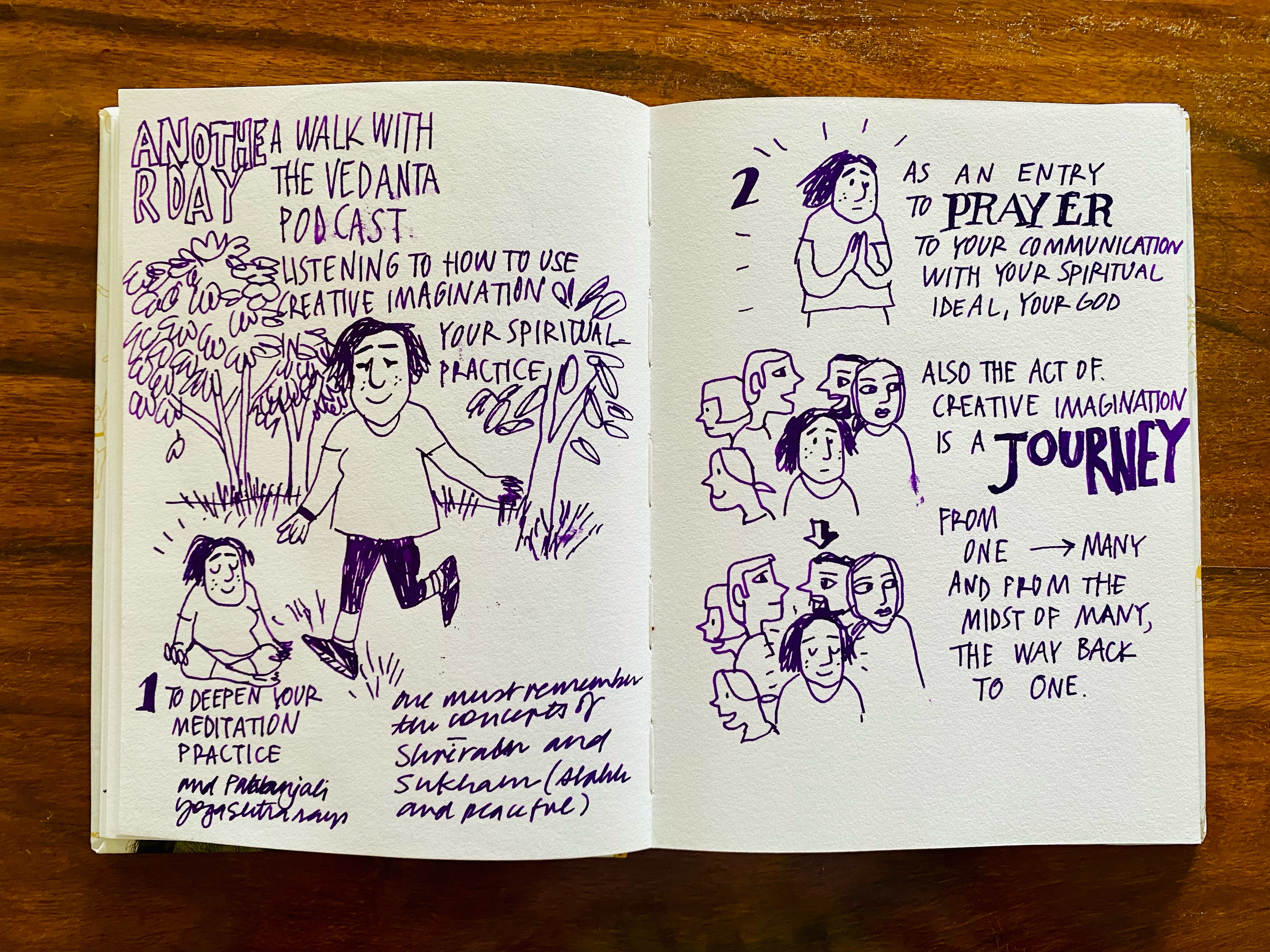
A visit to the local passport officeDaily drawing at dinnerNotes from a podcast
This was the podcast episode I made notes of, though it’s not my favorite episode. And surprisingly, I have been reading more about spirituality all of a sudden, but coming in through poetry, like this wonderful, magical book In the Shelter: Finding Home in the World by poet and theologian Pádraig Ó Tuama, who also hosts the podcast Poetry Unbound. In the book, Padraig has an amazing chapter on prayer “Hello to the imagination” which changed my perspective of it as an opaque ritual that was not for me.
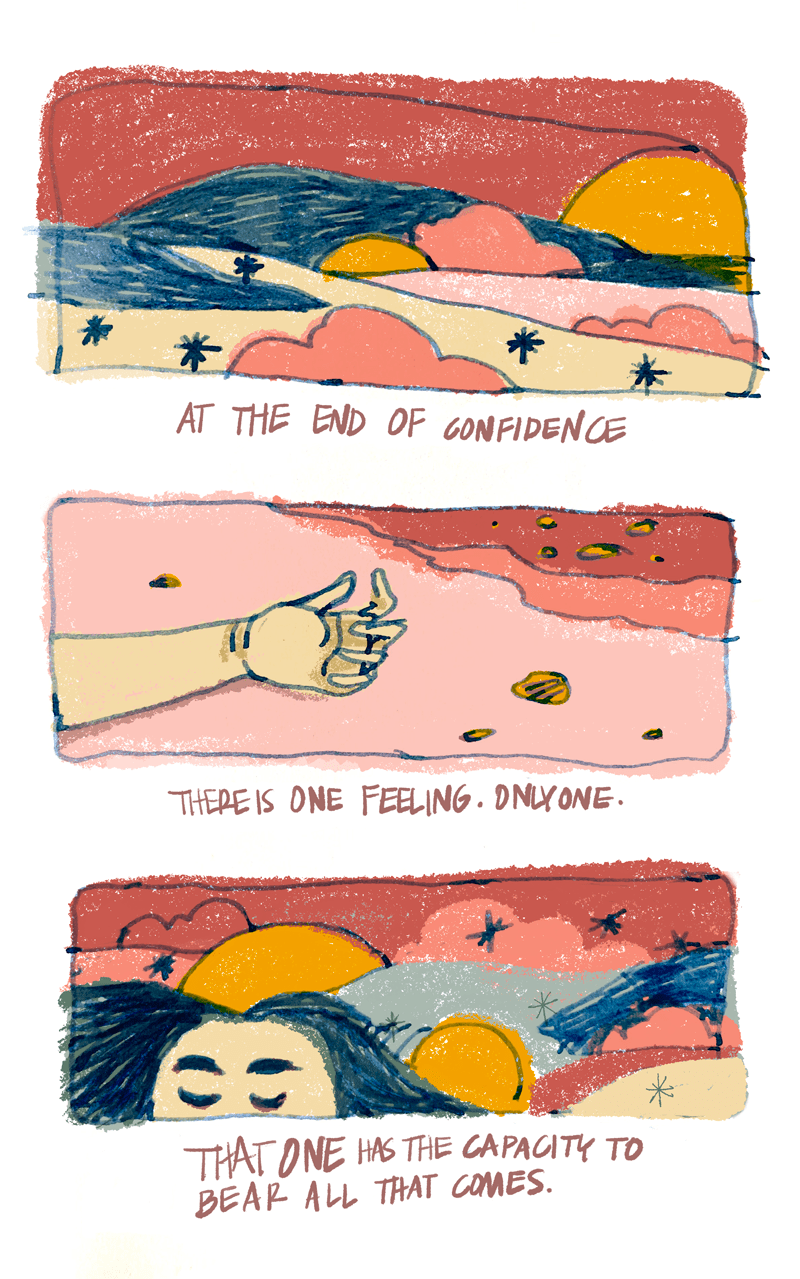
You will find meaning Where you give meaning.
The answer is in a story and the story isn’t finished.
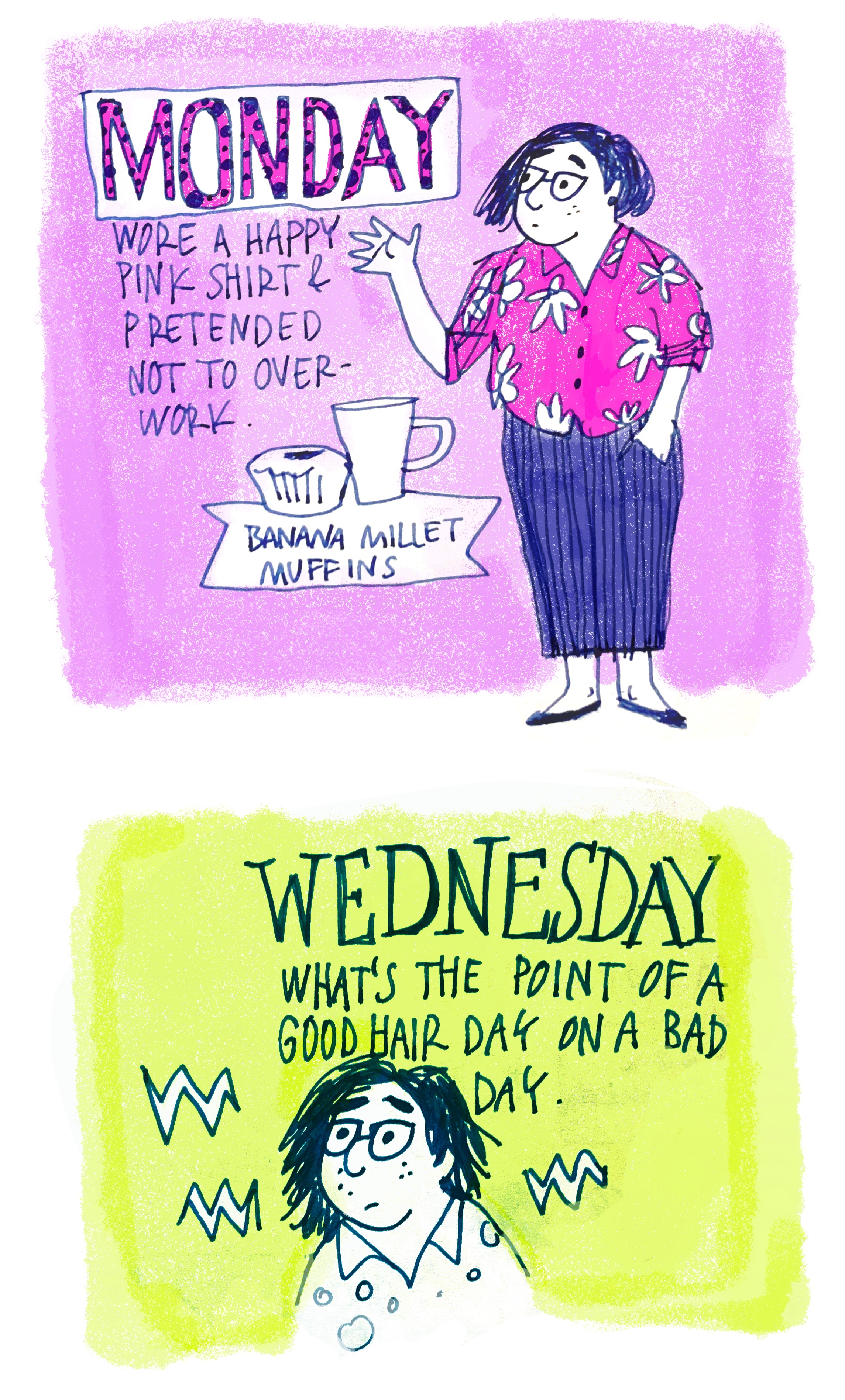
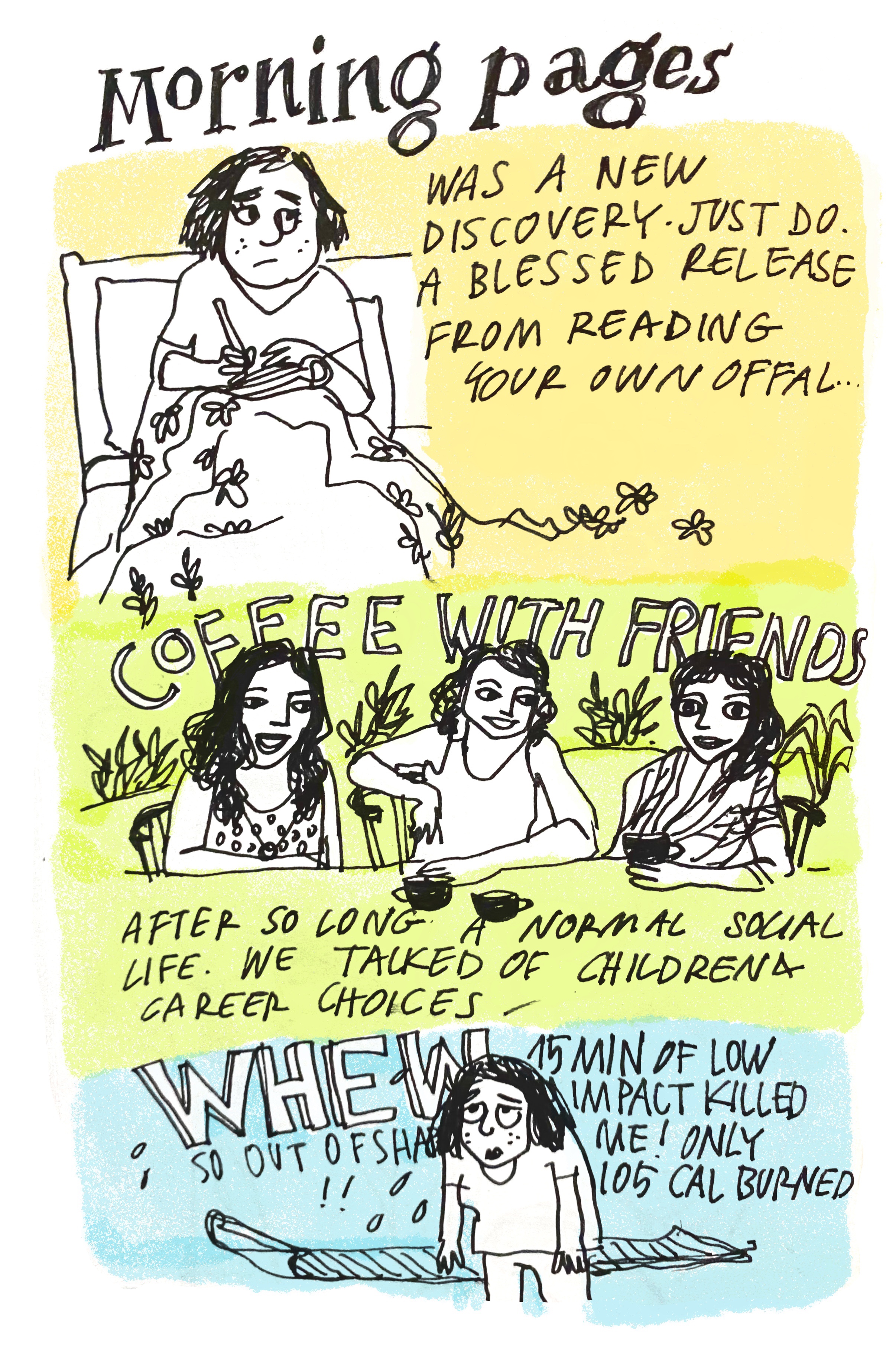
A typical week in my life, pretty sure so many millions of women across the world have these exact same days…
I’ve been thinking, I haven’t seen myself or people of my demographic reflected in mainstream media for nearly a decade now. While that frees us up to define who / what we want to be, that’s one reason I keep on documenting my life.
A century later there might be no record of what Indian middle class urban working women did, in all their diversity.
Luckily I’m not the only one – Women at Leisure is a great record, our friend Smriti is a prolific blogger too, and there are probably more such personal documentation out there that I don’t know of.
Good thing that women have always journaled, at least for the past few centuries. It’s probably because they have always been silenced officially and have had to seek out a way to express themselves somewhere.
My own great great grandmother Rasasundari Devi was the first Bengali woman to write her autobiography.
This was at a time, around 1810-1830, when even basic literacy was denied to women in Bengal, so she had to teach herself to read, and after nearly twenty years, to write. She started writing her autobiography in her fifties when her children were grown. Around the same time, social reform in Bengal had barely started in Calcutta, but she lived in a village away from all this, and so was completely self-taught.
With such precedents, we would be throwing away our privilege if we did not use a bit of it to bring about a collective voice for those not represented in the mainstream. I know we can do more, and I’m speaking from my very entitled perspective, but it’s a start. It’s a purpose – to stop whiling away time and channel it towards expression.
Title re-purposed from a poem by Jim Moore, American poet.
This video and the earlier one are how my day-to-day journal drawing takes place. I sit down with my book and try to draw what’s on my mind. Sometimes I start by drawing what’s in front of me – which is why there are so many drawings of Orin eating! At other times I draw the day, how things went, what I listened to, or read. Sometimes my mind is blank and quite often the fear of the empty page threatens to take over.
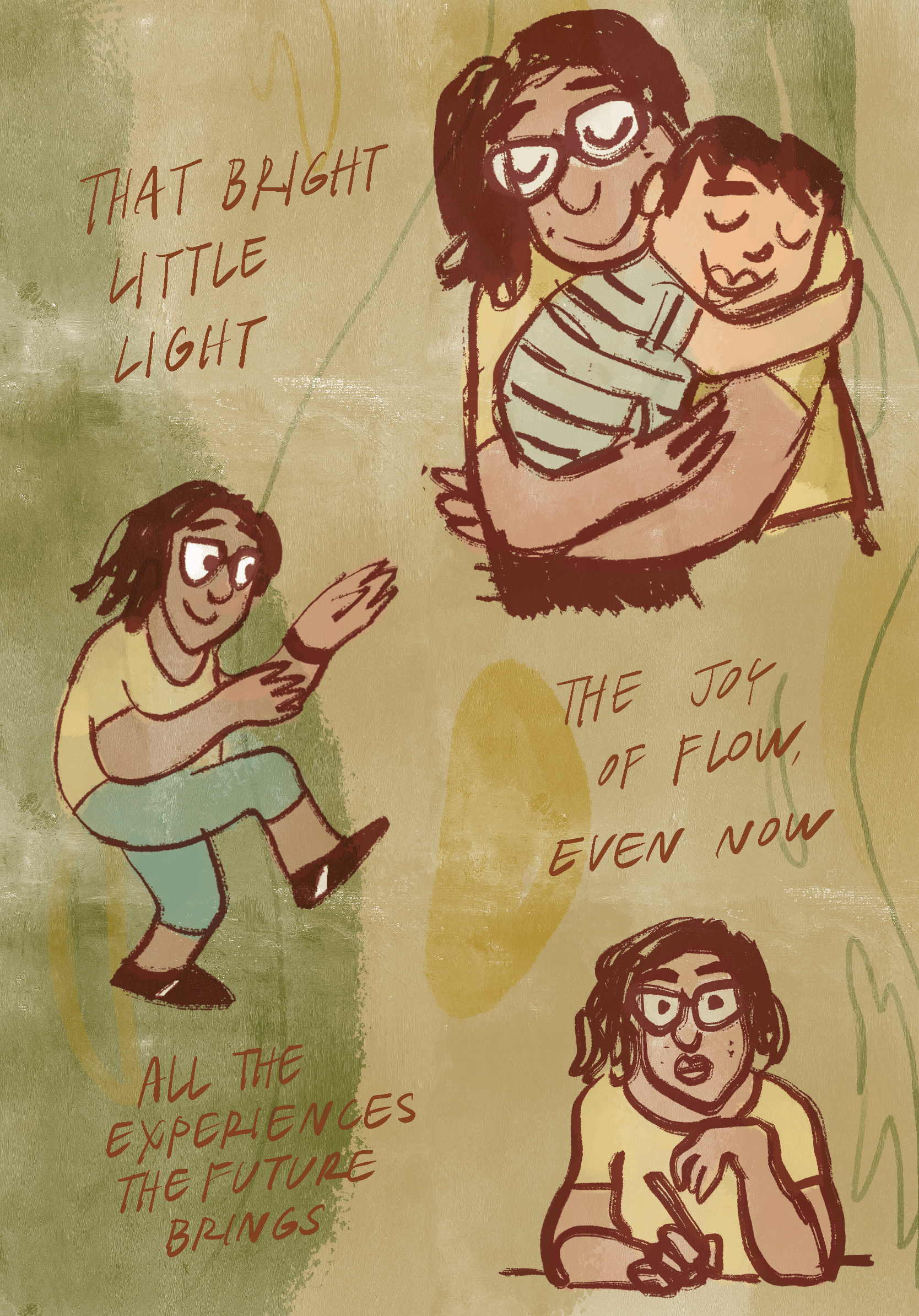
But the important thing is to show up, and get over that fear, the fear of not being good enough, the fear of not living up to your own expectations. And after some time, I find the flow, I start to commune with myself, and joy takes over.
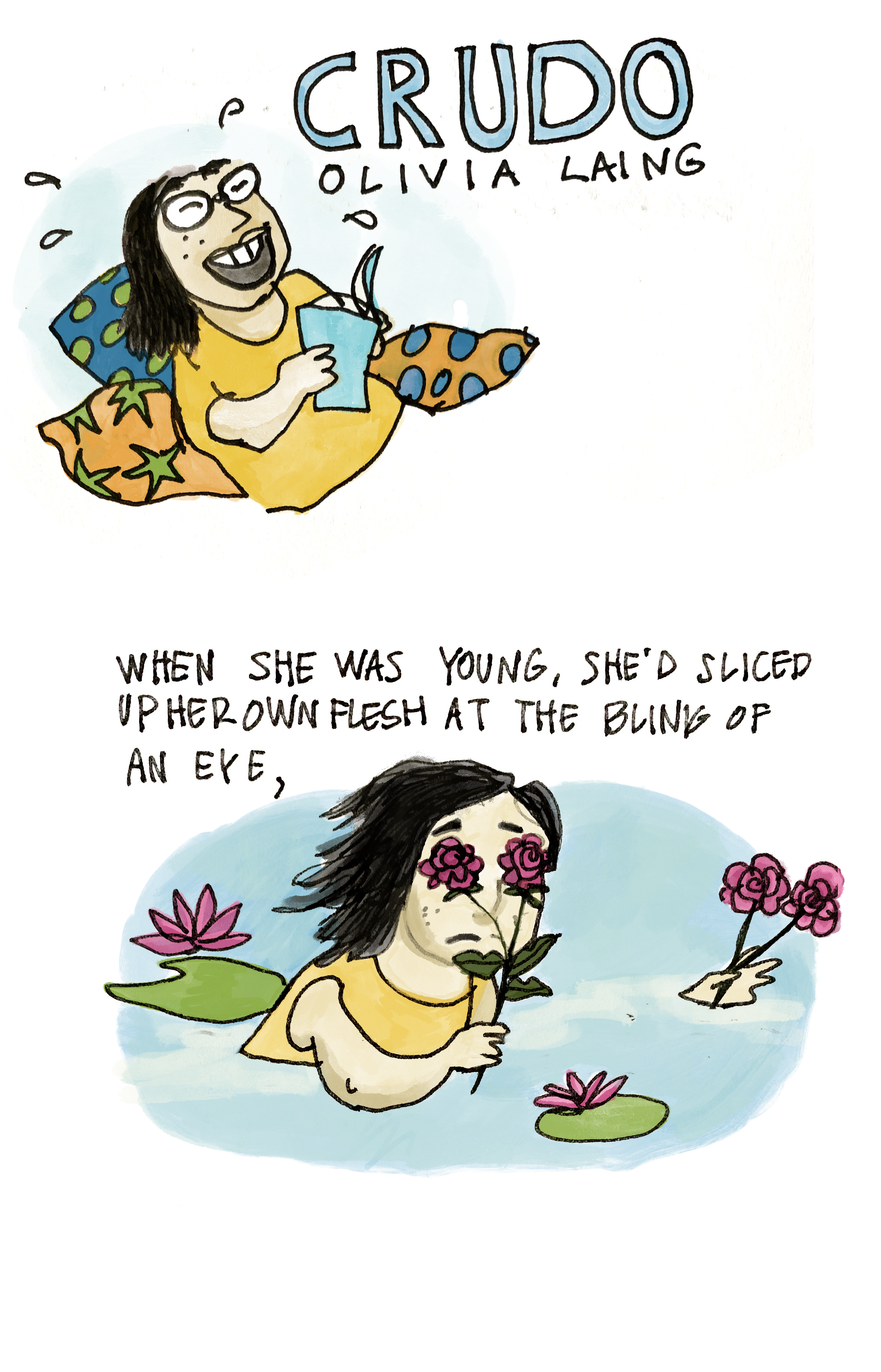
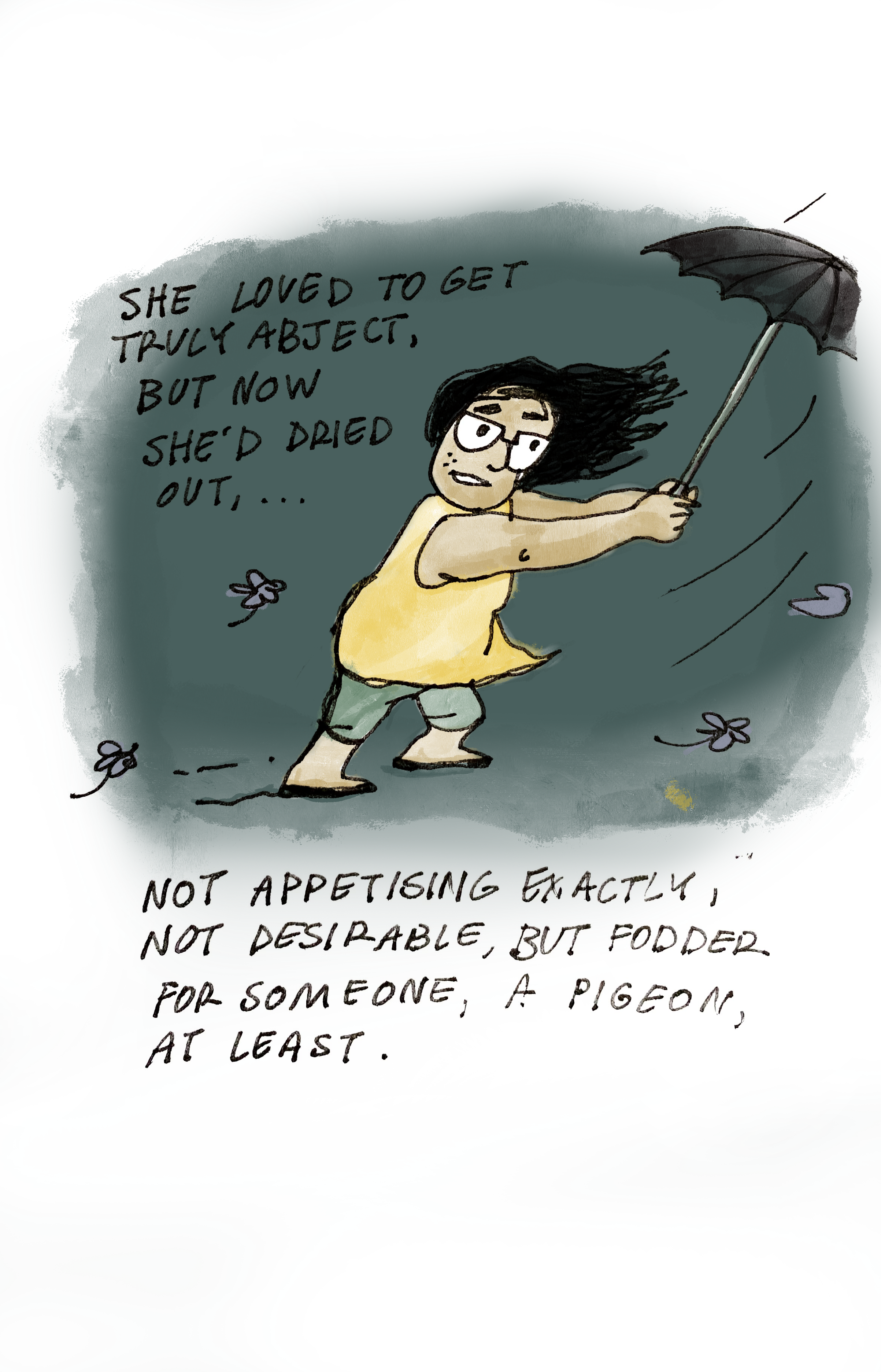
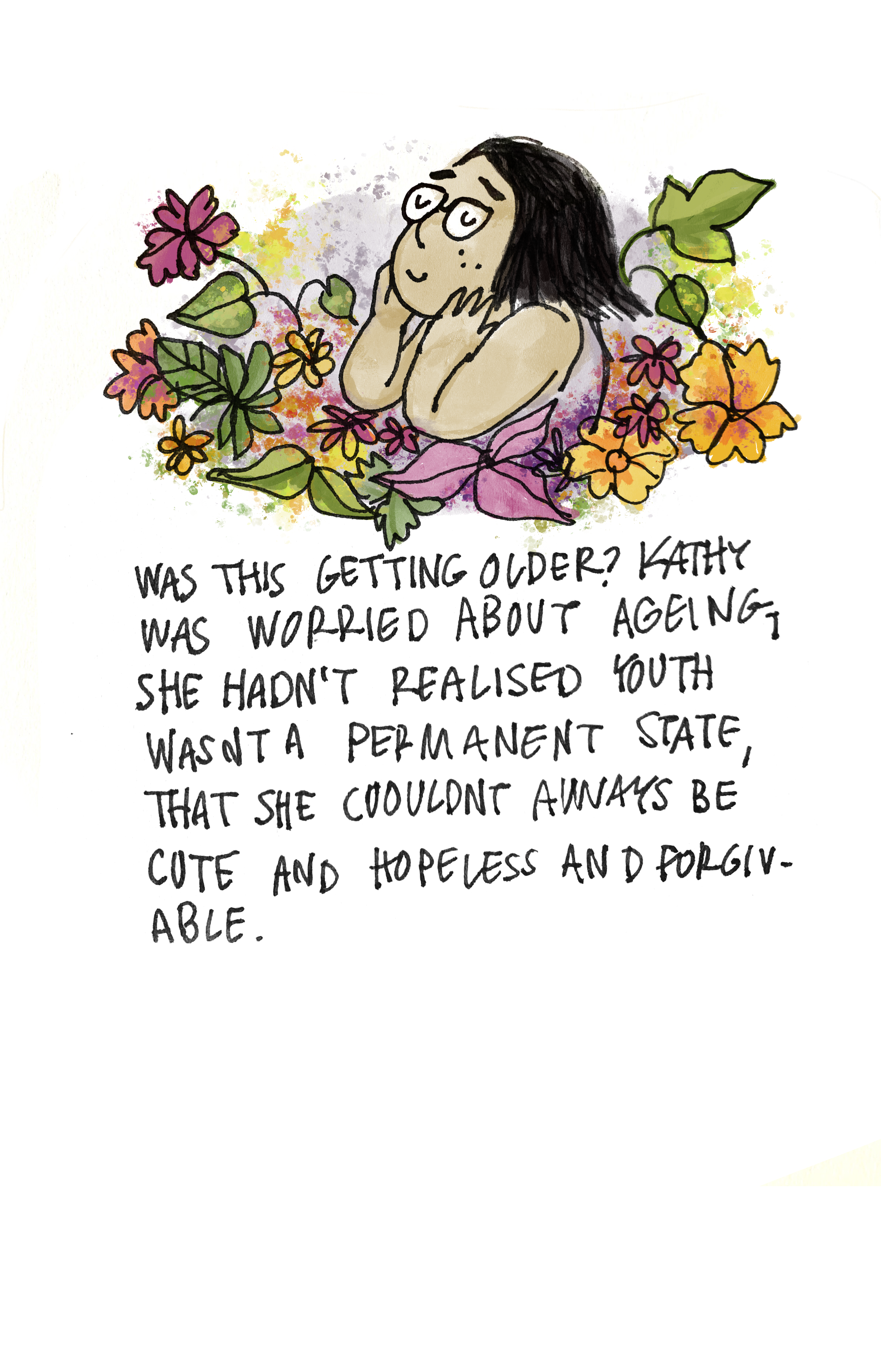
“When she was young, she’d sliced up her own flesh at the blink of an eye, she loved to get truly abject, but now she’d dried out…not appetising exactly, not desirable, but fodder for someone, a pigeon, at least. Was this getting older? Kathy was worried about ageing, she hadn’t realised youth wasn’t a permanent state, that she couldn’t always be cute and hopeless and forgivable.”
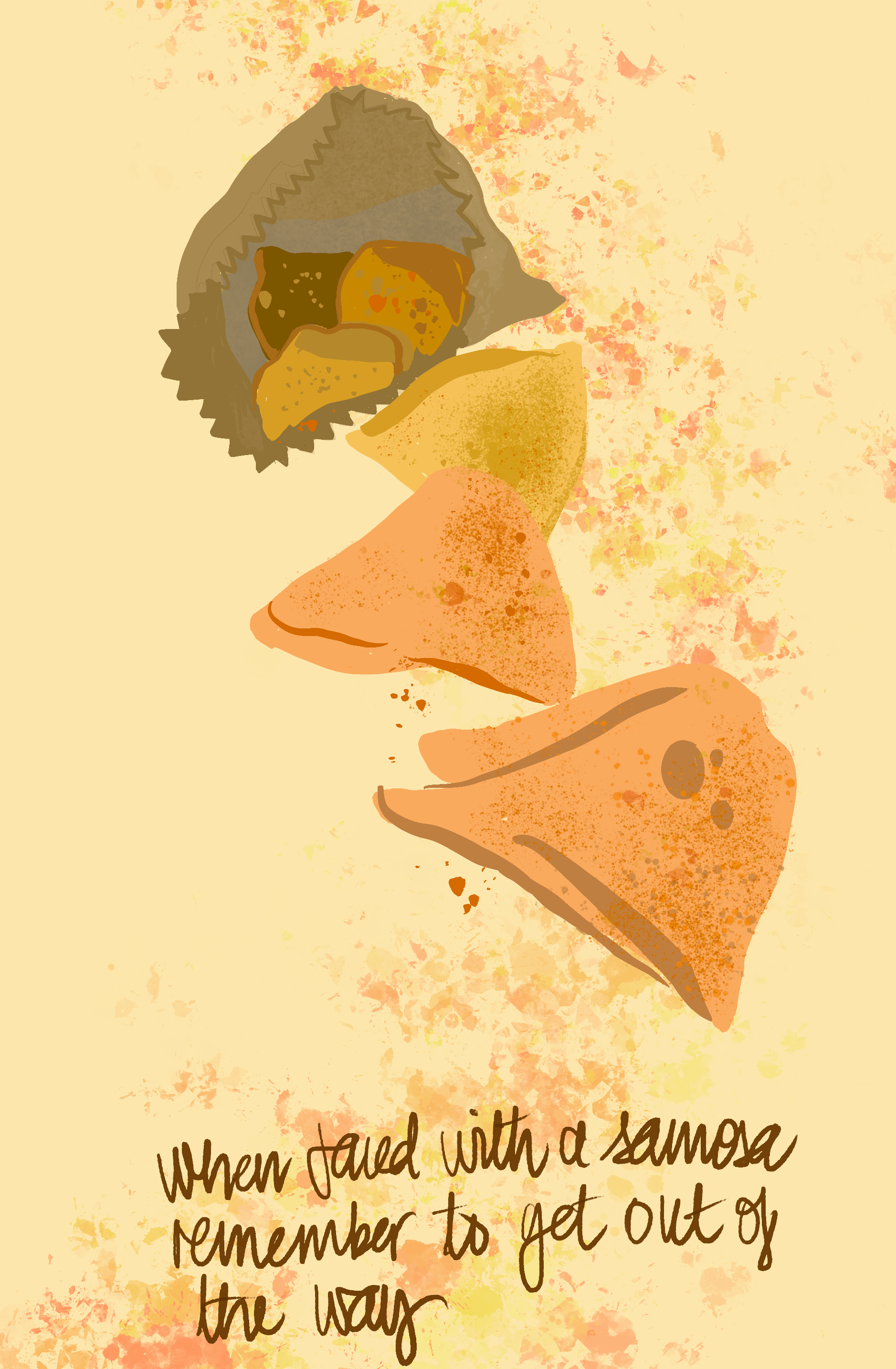
It takes place over a few days in her fortieth summer, and she’s about to get married. It’s not often that we see ourselves reflected so accurately in literature with all our fears and pimples and headaches, and Olivia Laing as Kathy Acker was spot on.

 inktales