
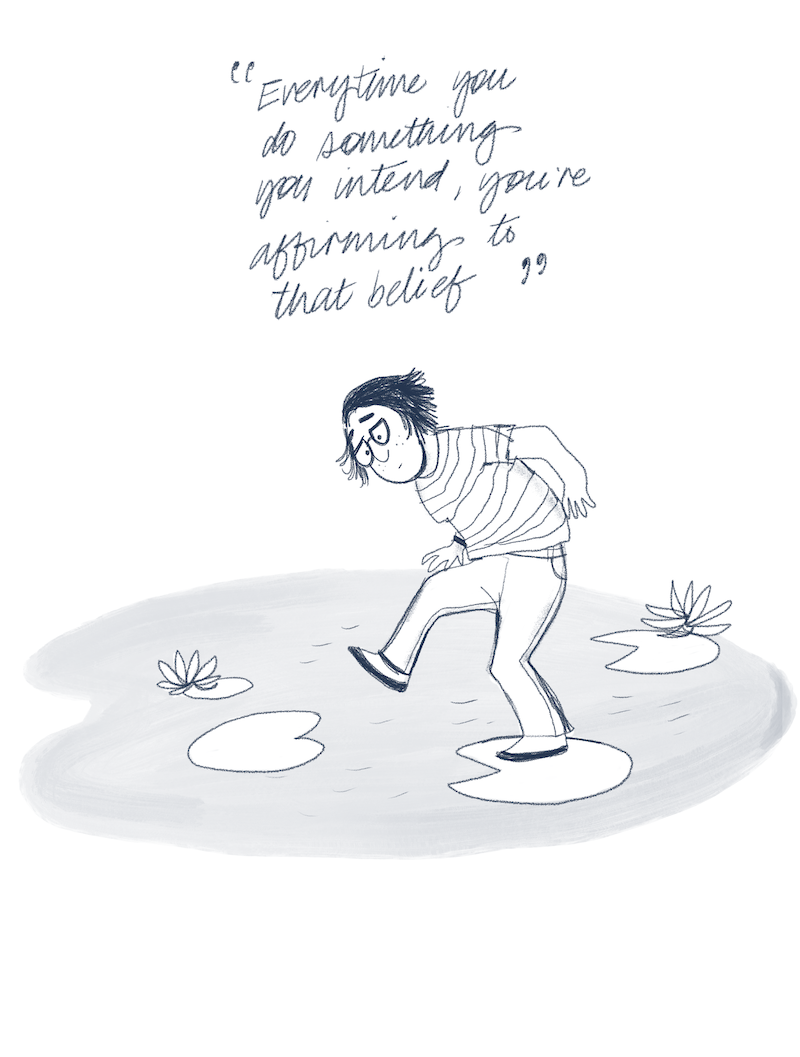
I was listening to Affirmations by the Vedanta Society.
I was listening to Affirmations by the Vedanta Society.
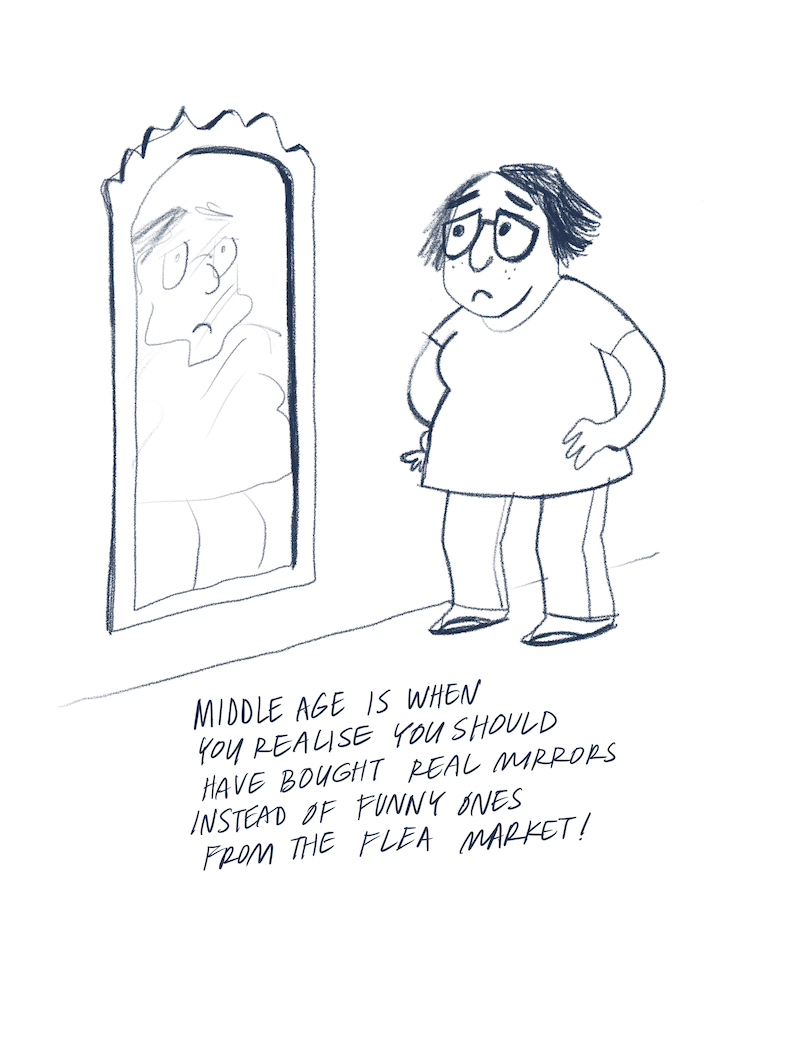
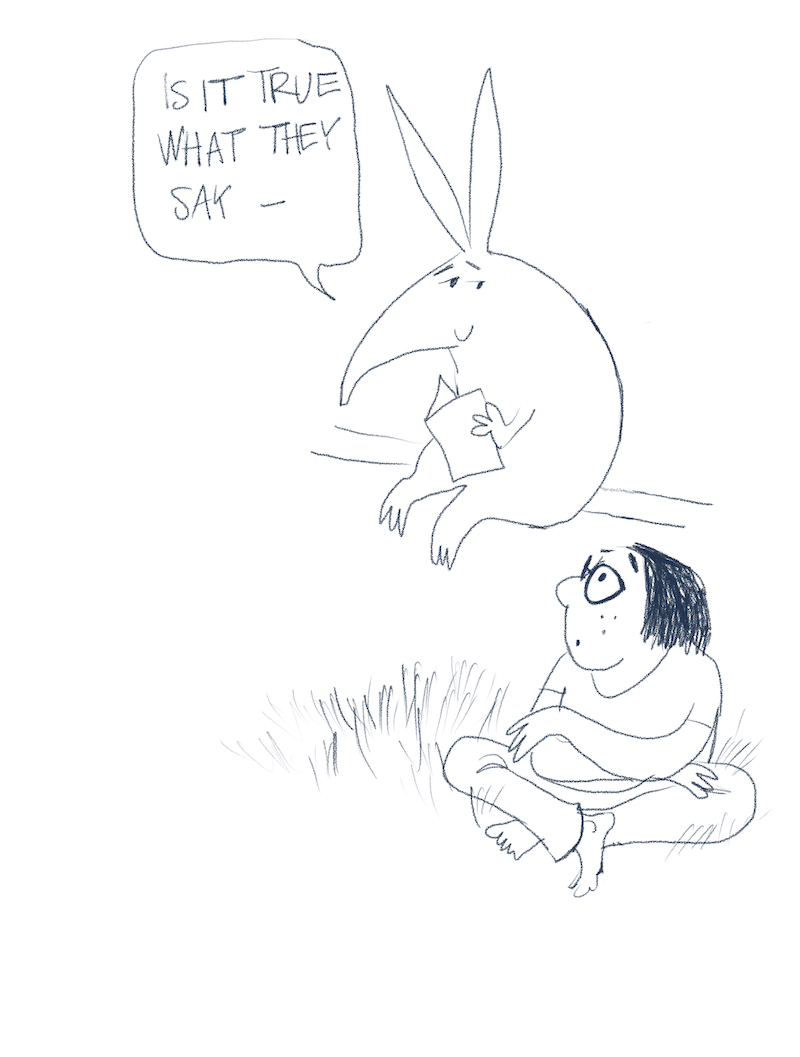
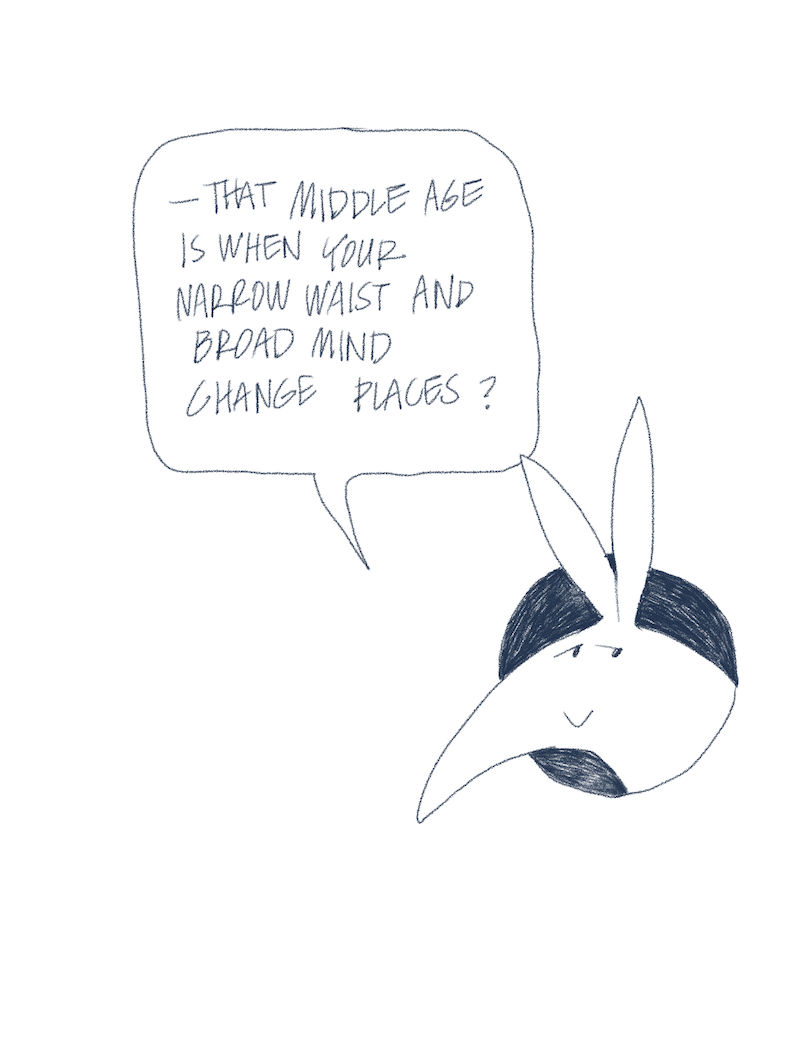
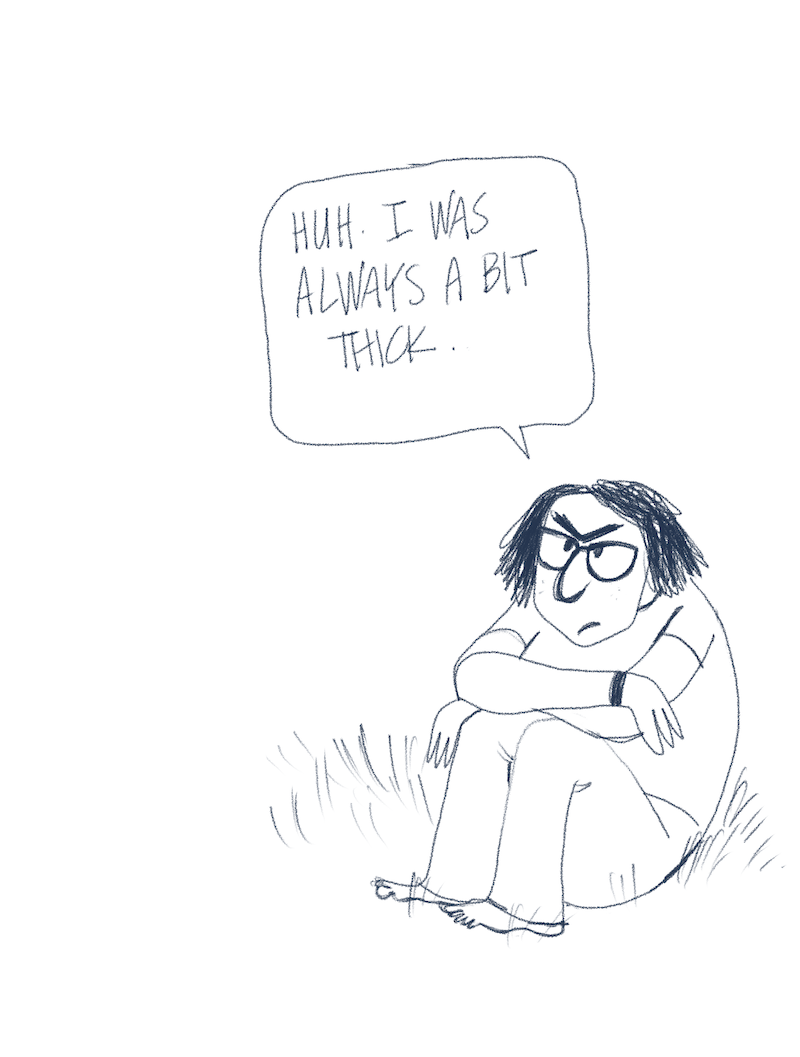
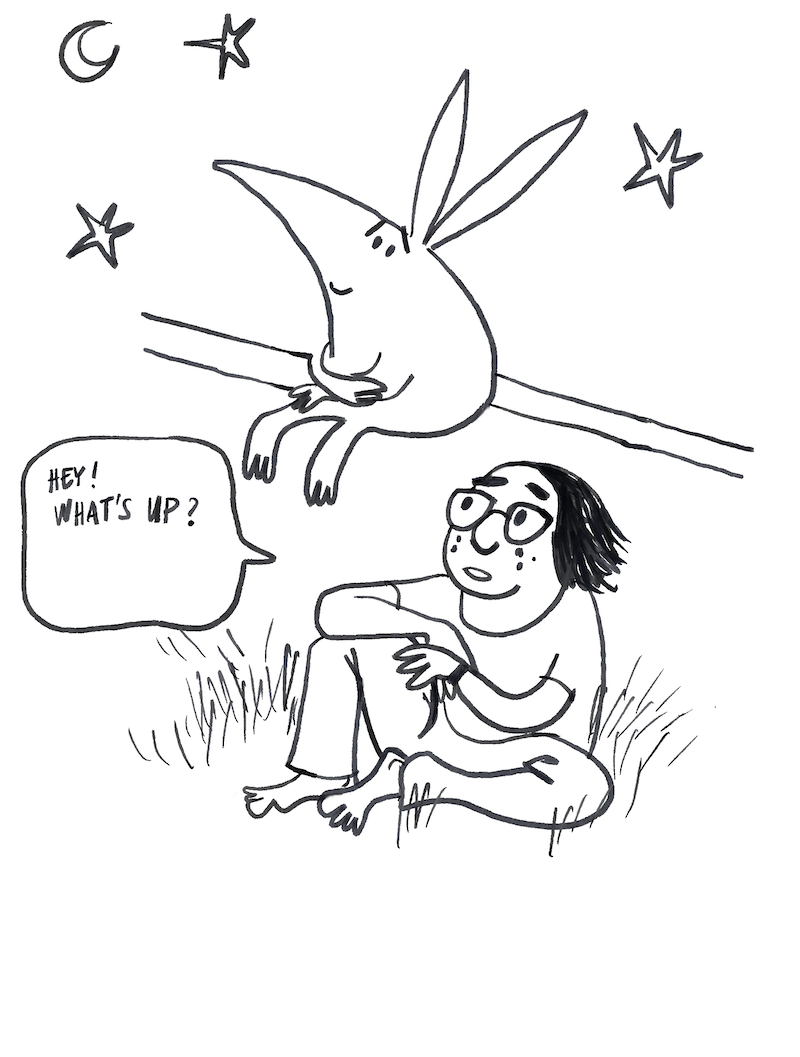
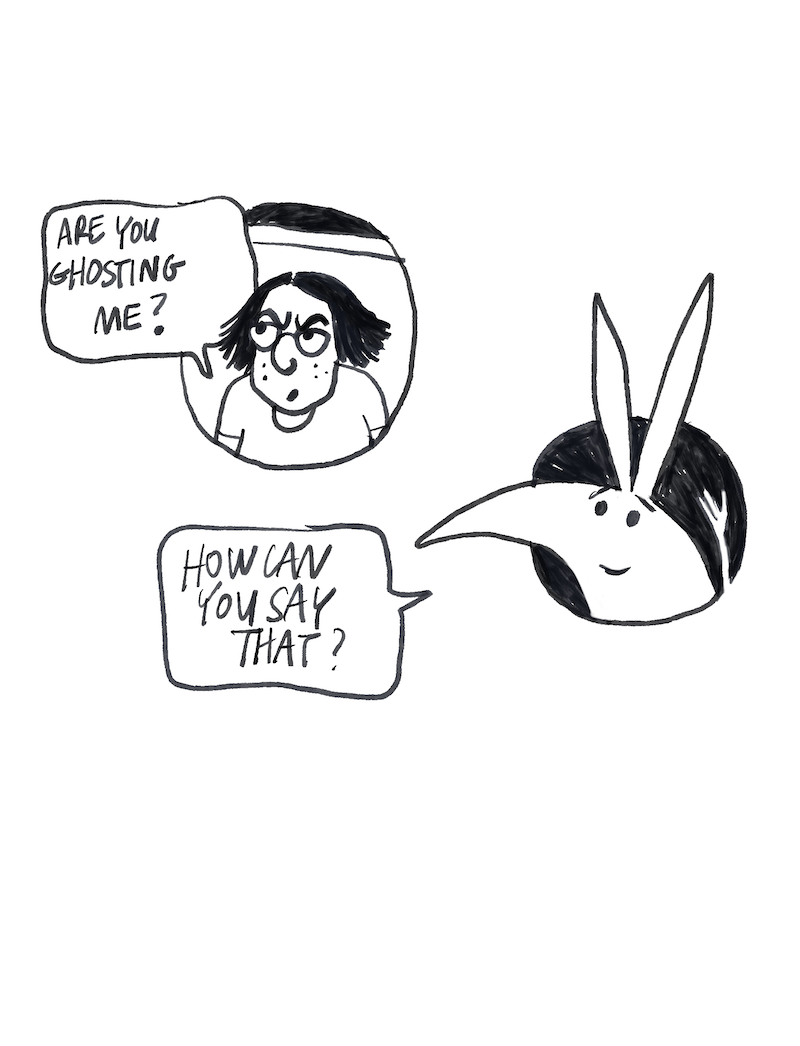
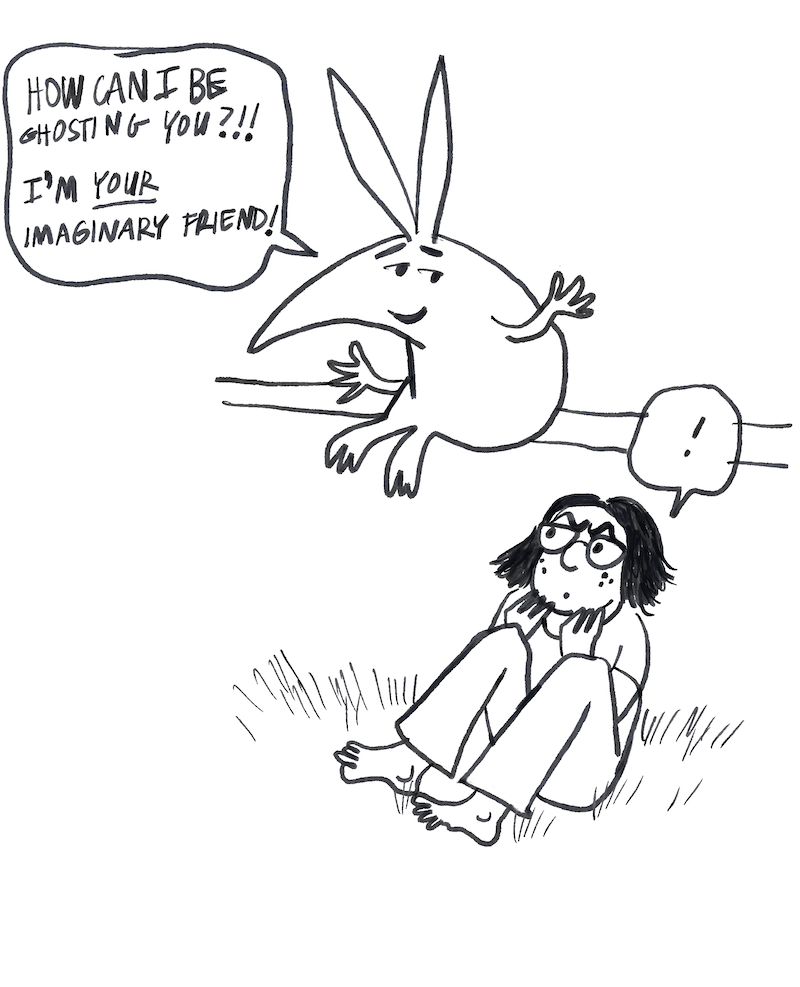
Those who know me, know how excited I have always been about growing old. I cannot stop celebrating the middle ages! But trust the anteater to throw a damper on my happiness –
Big news from me: The brown boy and I now live in Bangalore, our 5th Indian city. This is exciting, I love being able to live in and learn about different parts of India and savoring some of the local culture, not to mention the sweets!
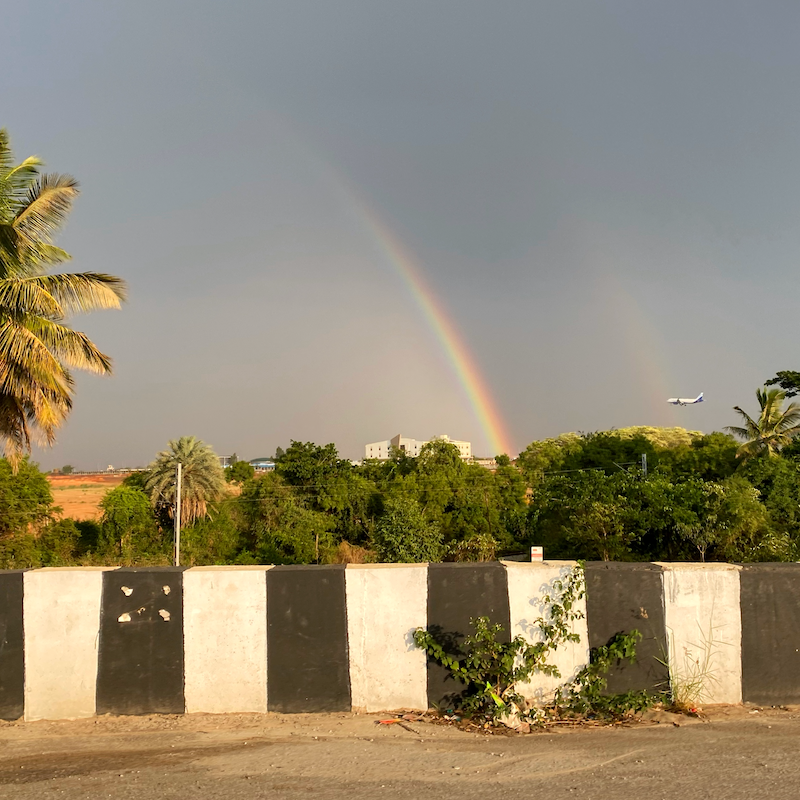
Driving into Bangalore, we were greeted by a double rainbow…
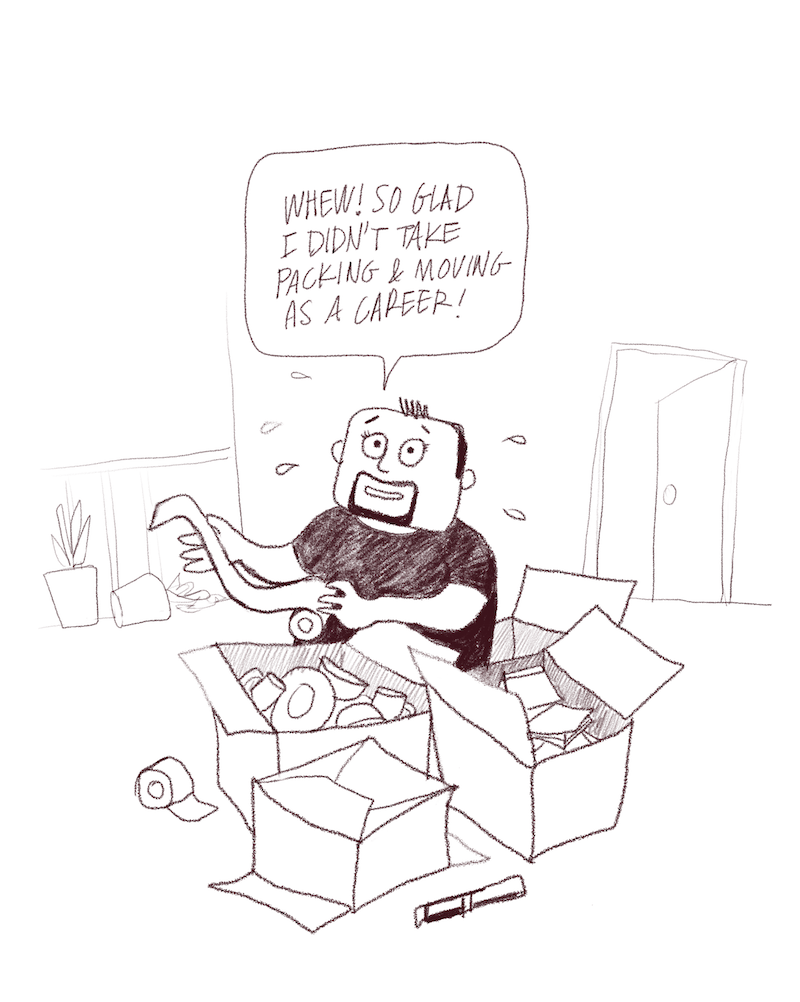
Despite the brown boy’s love for masking tape, things have been busy and chaotic, as we went uprooting our lives and then making new rituals in new spaces.
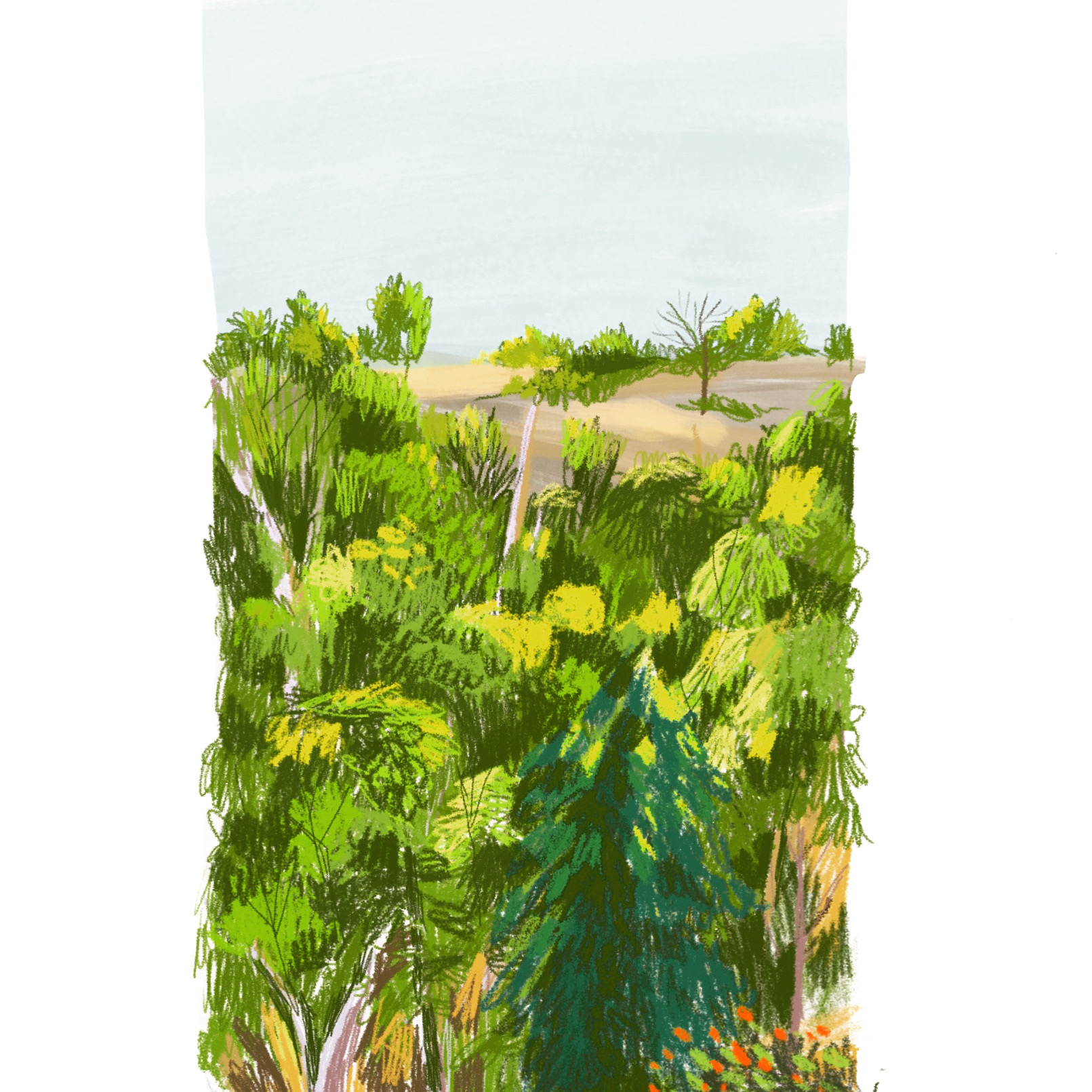
Drawing, as always is the most grounding ritual for me – to help me really connect to a place and be in the moment.
If you’re around, don’t hesitate to hit me up!
Life’s been a whirlwind, reader. So much to do, and so many things inspiring me. Grateful for the days when energy and good health can keep up with my intentions! Here are some drawings from the past few months –

A sunrise walk with the brown boy, who tells me that I steamroll across life with my overblown sense of purpose. Good to know that I guess. Anyway, who can be mad at him for long? At breakfast we caught up on gossip we couldn’t share in front of the little tornado (who was in school).
Font: Cantoni Pro
I’m always more prolific in April, maybe because I’m an April girl? And looking through old posts, found some of my favorites
Me meets me (2012)
Paris Cafe (2012)

The Body Rebels (2009)
Here are the original drawings on our wall. I sometimes catch the little tornado showing them to his friends and giggling. And my heart is full.

In April I always posted holiday sketches. Here’s
Rajasthan – Part 1: The Bikaner diaries – Part 2: Jaisalmer (2008)
Rishikesh, lord of the senses (2014)
Sri Lanka (2017) – Part 1 – Part 2
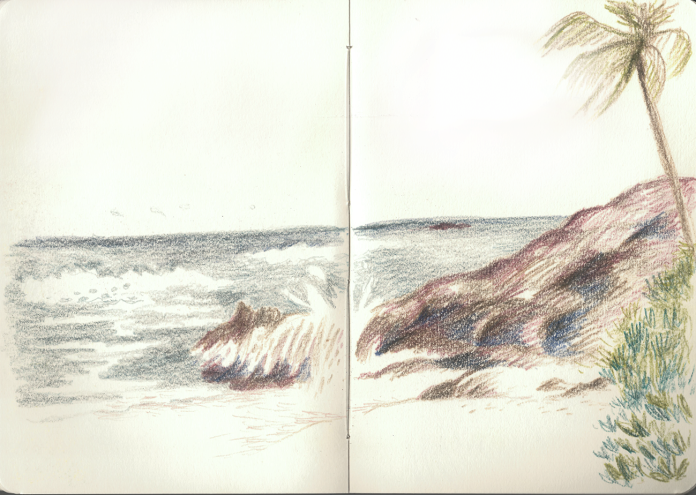
and even, Space Travel (2011)
Birthday posts, of course –
Turning thirty which was my mid-life crisis and I decided to leave my very well-paying job and the lovely brown boy and go study in a remote country for two years.

Top 5 Best Birthday Gifts of All Time (2007) after I had just read High Fidelity.
Age Appropriate (2016)
Milestone posts, like
Our Labour Story (actually 2015 but posted in 2018)
Olinda App (2013), which is one of my favorite pieces of my own work and for which I got my first US patent
Masters Thesis (2010)
Noseburn (2009), when Ananya and Jedi rode off across India
and some other cute stuff
Getting Fed by chefs in Swedish cafes (2010)
Reasons to Live (2008)
Twitter’s taking over (2009) when I was OD’ing on it
and some inspiration (2019)

And this drawing from January – is there anything as wonderful as looking back on old journals? Austin Kleon agrees with me too.
For me they are a portal to return myself back to me.

When the world is hostile it’s wonderful to be welcomed back to myself.
This is the year, some of us old timers are counting their blog ages. inktales was started by me in May 2006, and in 2007 I moved over from Blogger to WordPress. I often think, that at 17 years of blogging on inktales, it’s one of my longest relationships – second only to the brown boy.
Today I was looking back over Januaries past, and while some Januaries have been super prolific (hello, 2009!) most years I don’t blog in January! Here are some of my favorites when I have roused my fingers out of Delhi’s icy winter to draw and type:
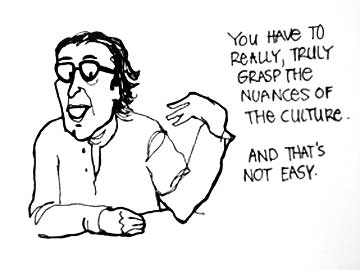
Here I am being inspired by Dr BV Doshi, who passed away yesterday. My Masters class was doing a project with immigrant children in Malmö at the time, I was finding it so difficult to empathize or get the nuances of their experiences. Language was a factor, since most of the children knew Swedish and their mother tongue, and not English, and my folkshögskola Swedish was nowhere near conversational. And then I read this interview in Blueprint Magazine.
Other favorites from 2009:
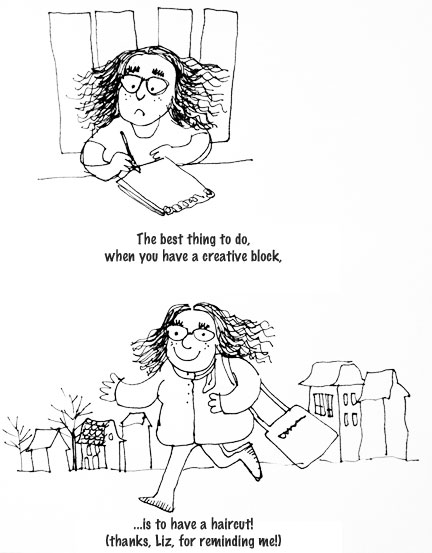
From a series on food in NID, La Bella, our favorite eatery from NID days
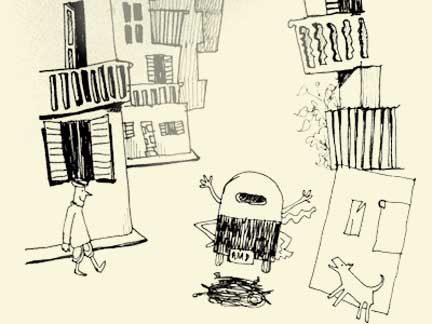
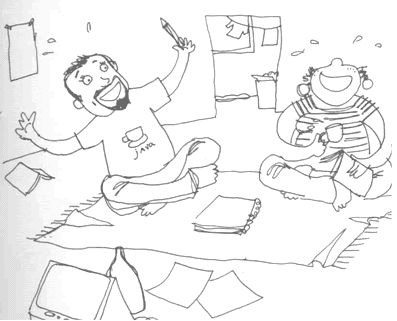
My first attempt at storytelling of our life, such innocence and still so true…
And these two lovely ones from 2019, another prolific January

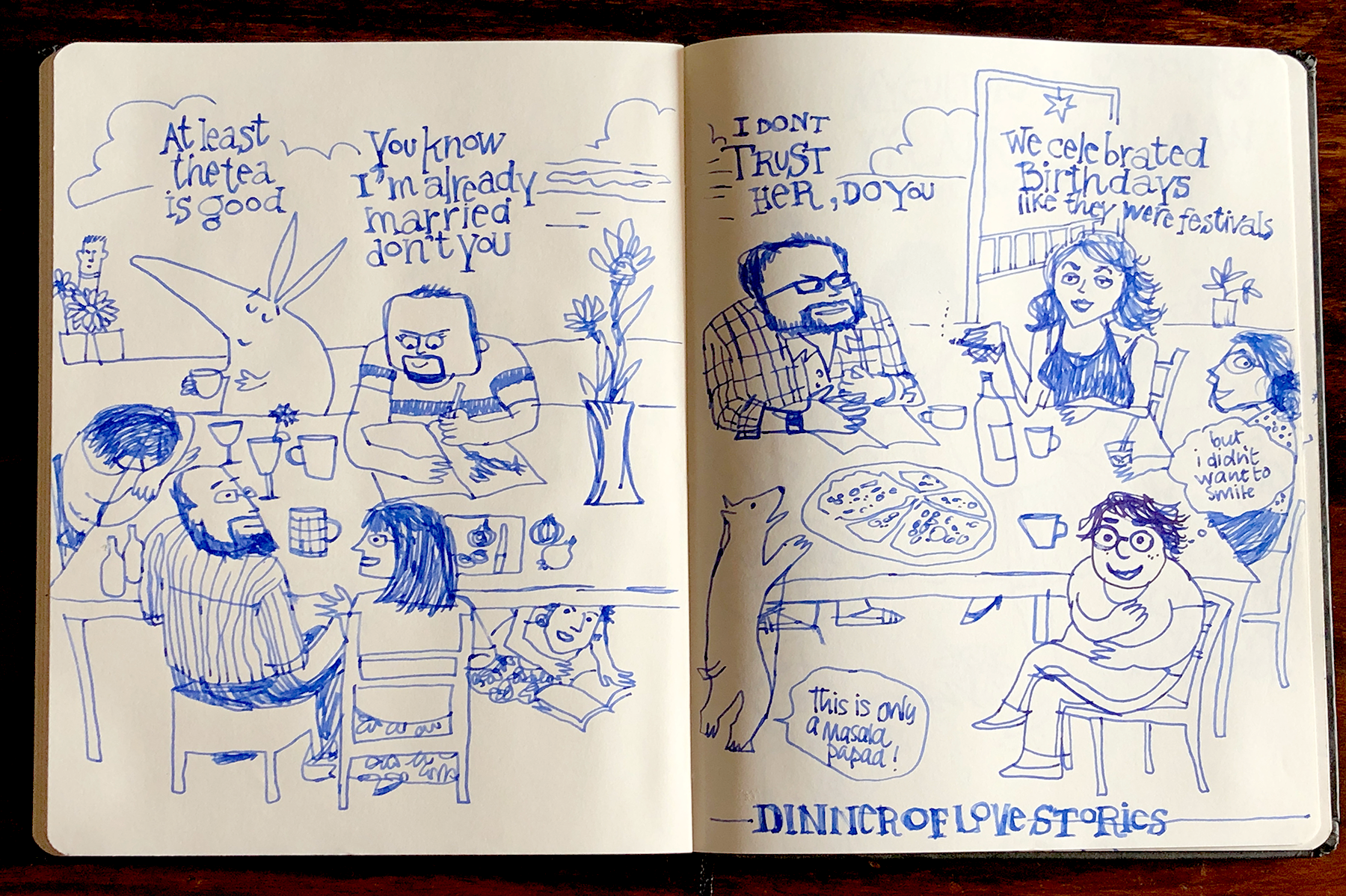
Filled with food and love
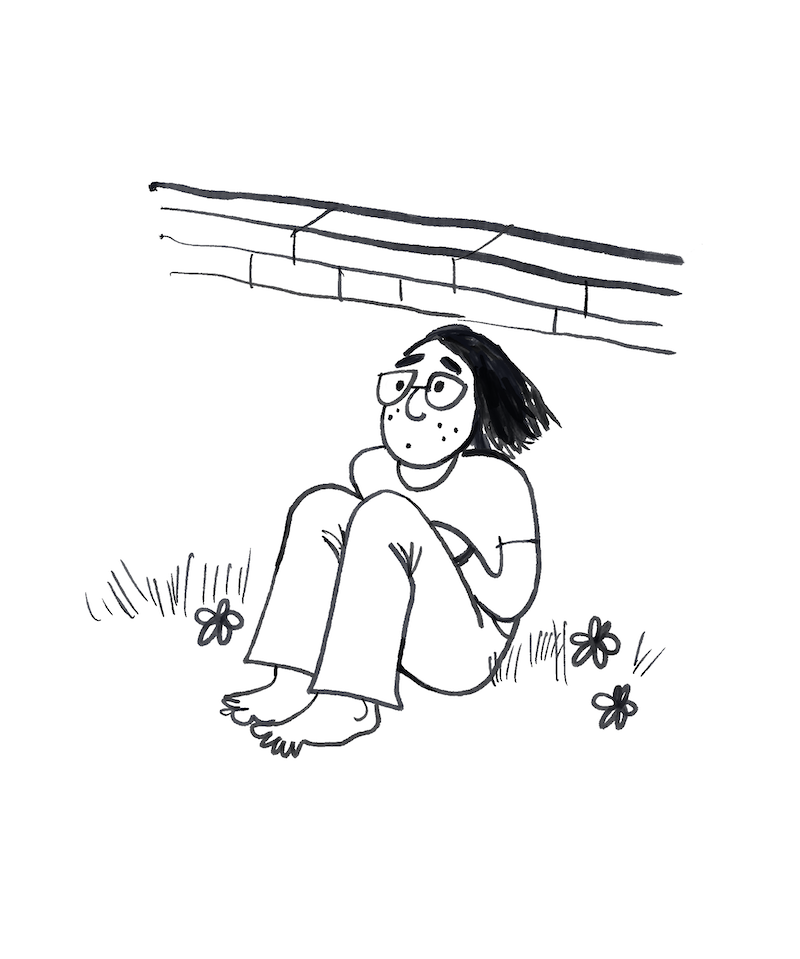
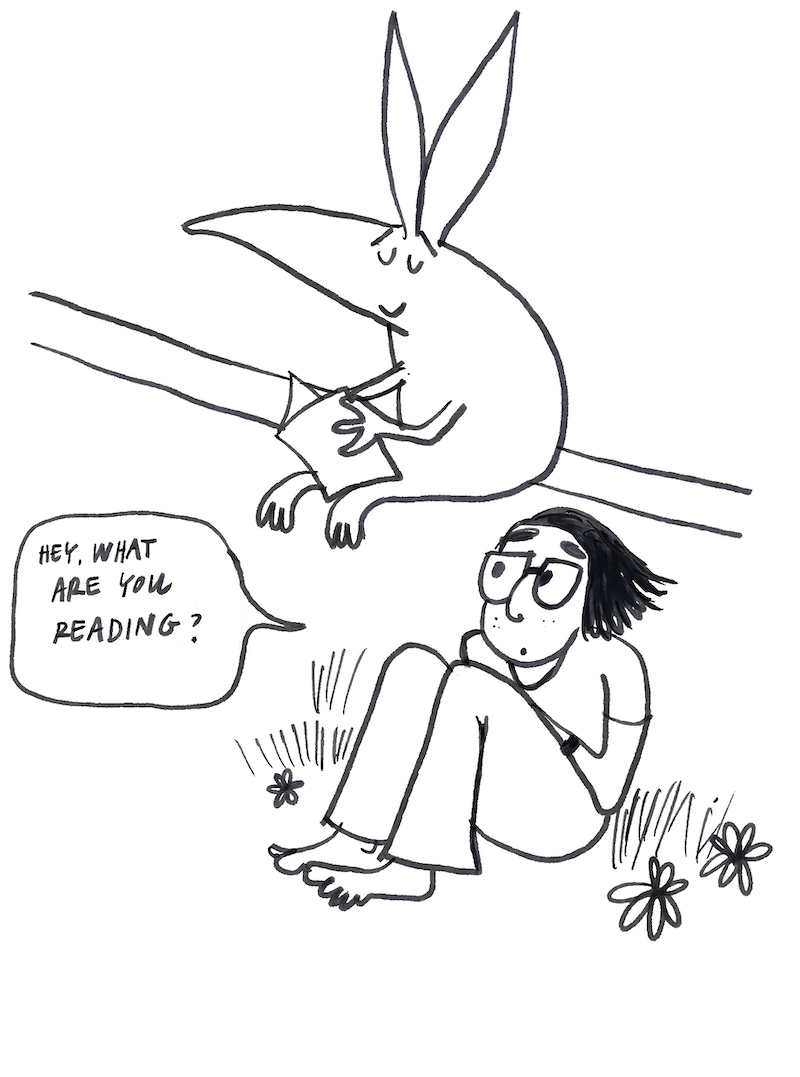
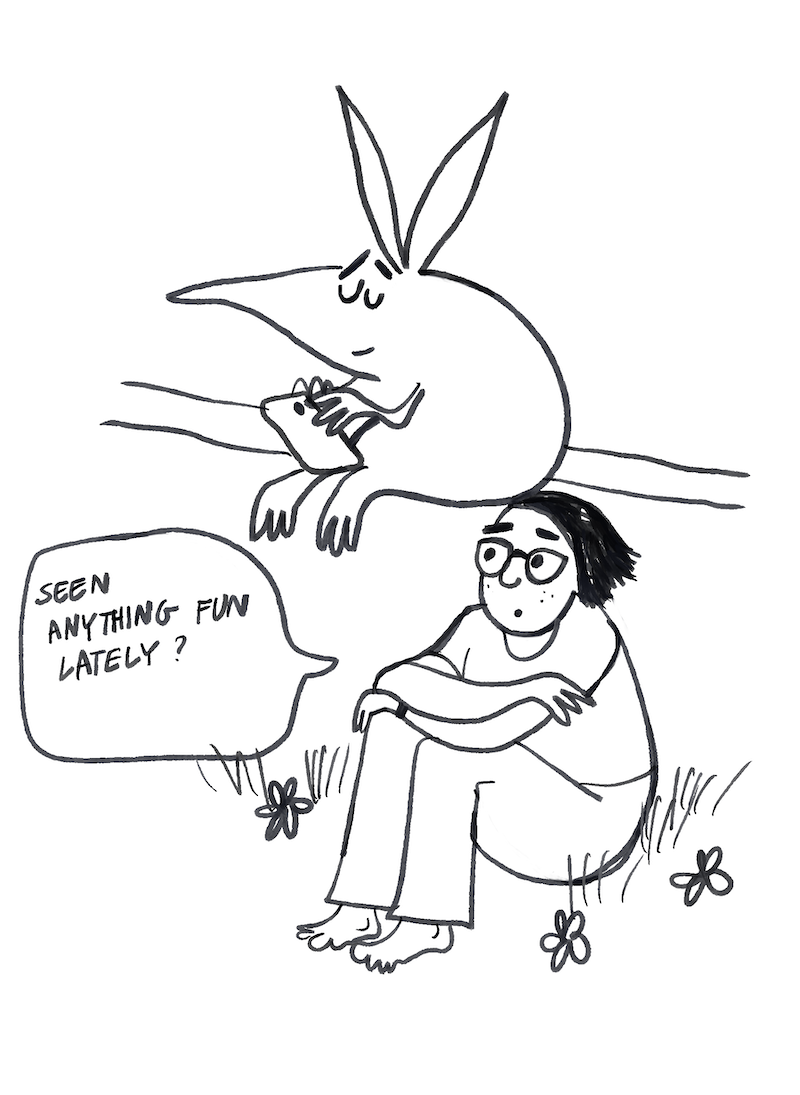
Most of you readers know I have many conversations with the anteater. He came into my life in 2009 with his wisdom (!) and never left. Here’s a recent conversation:
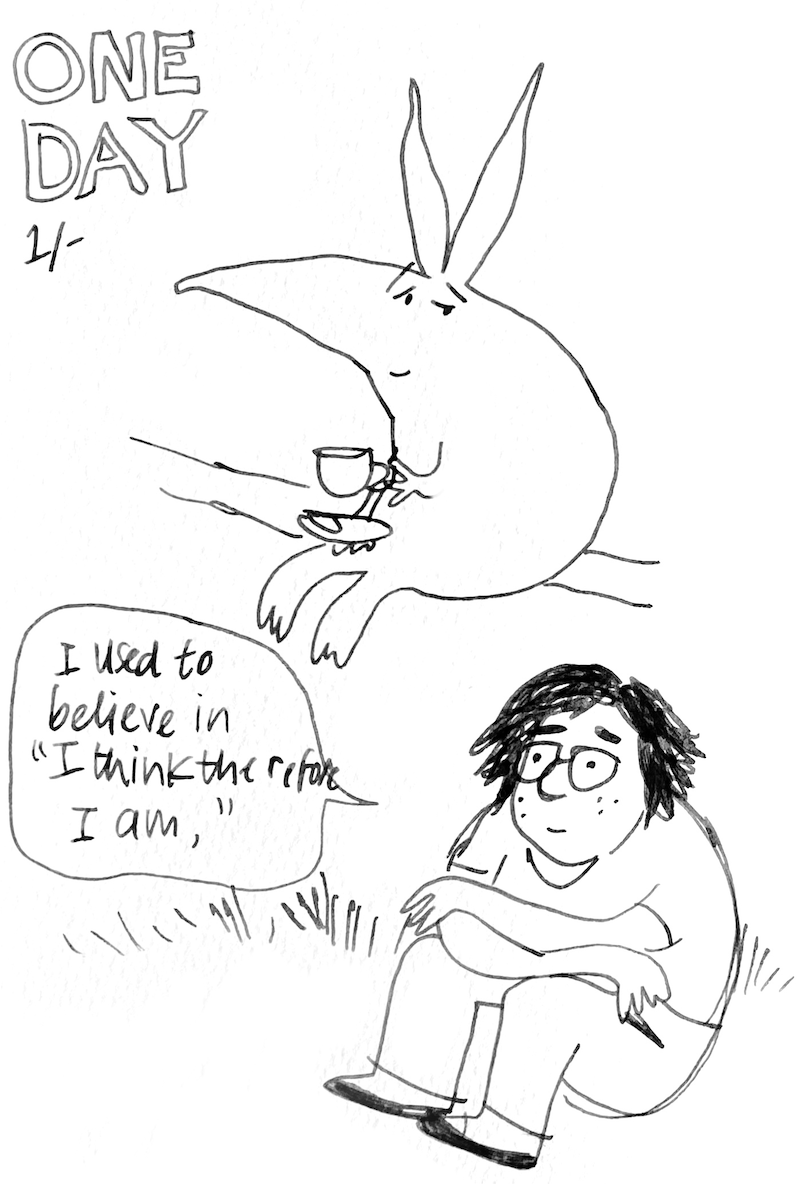
“I used to believe in I think, therefore I am“,
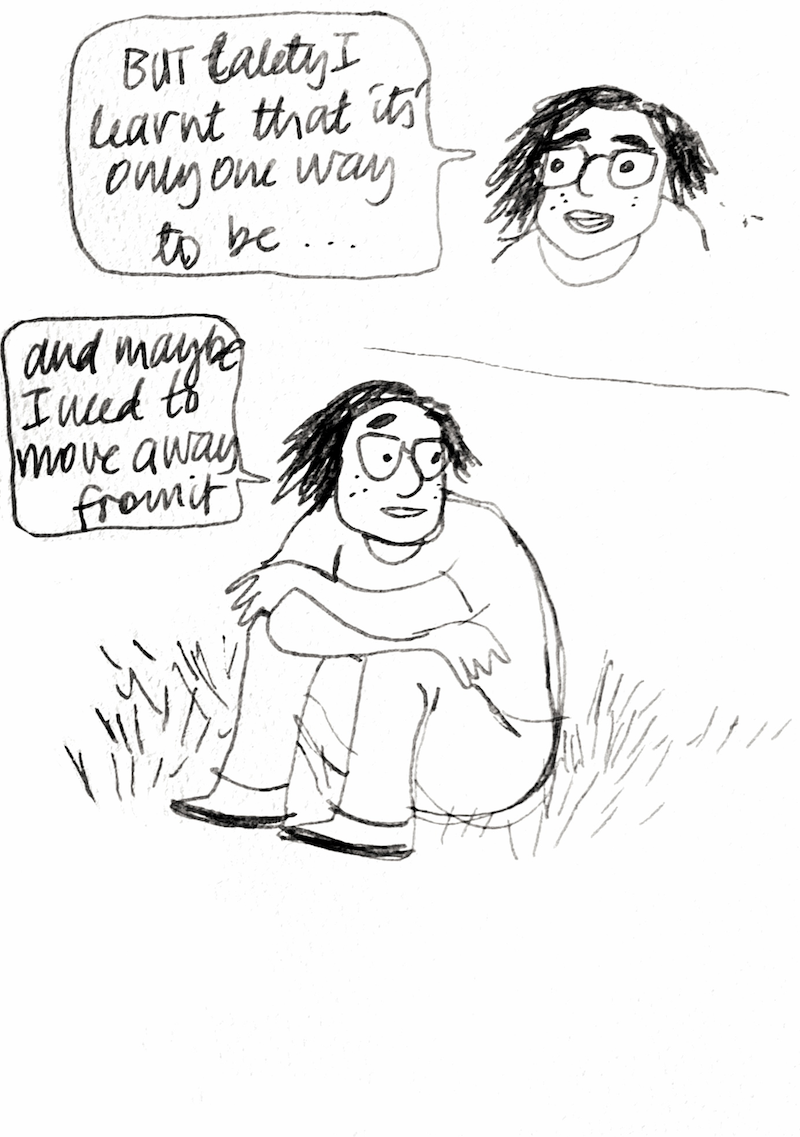
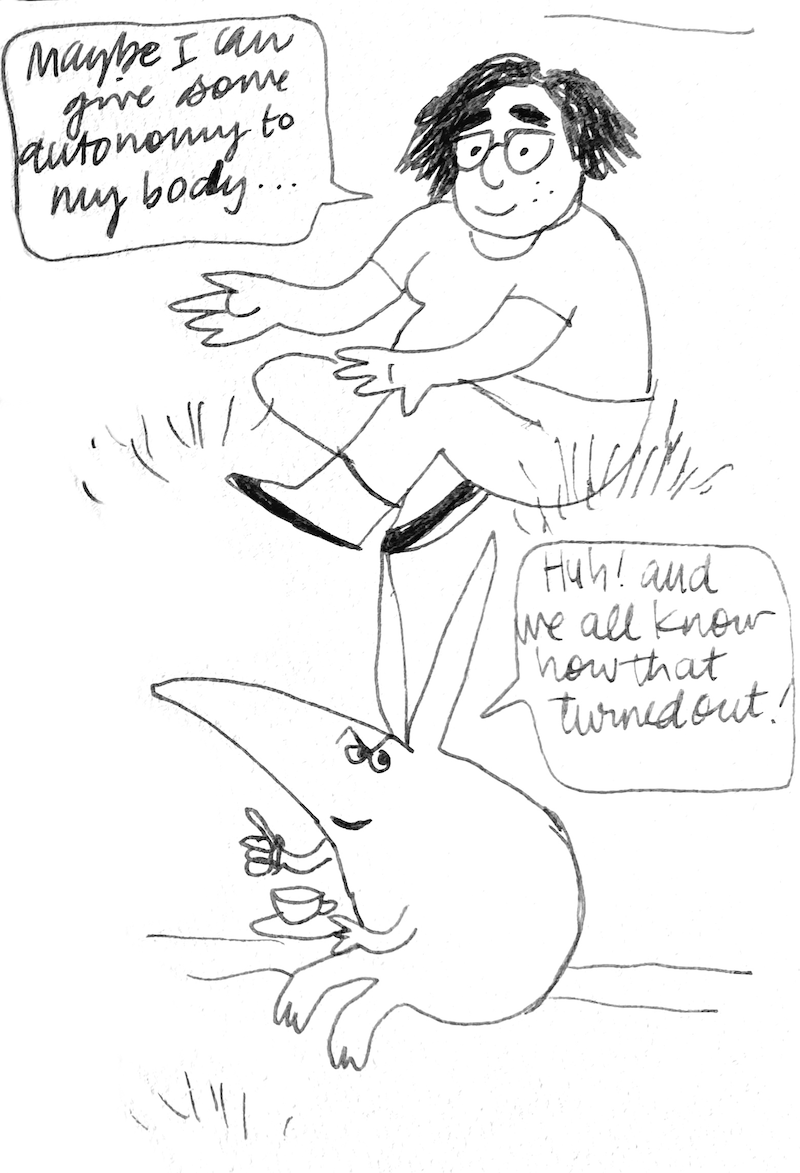
“Maybe I can give some autonomy to my body…”
“Huh. And we all know how that turned out!“
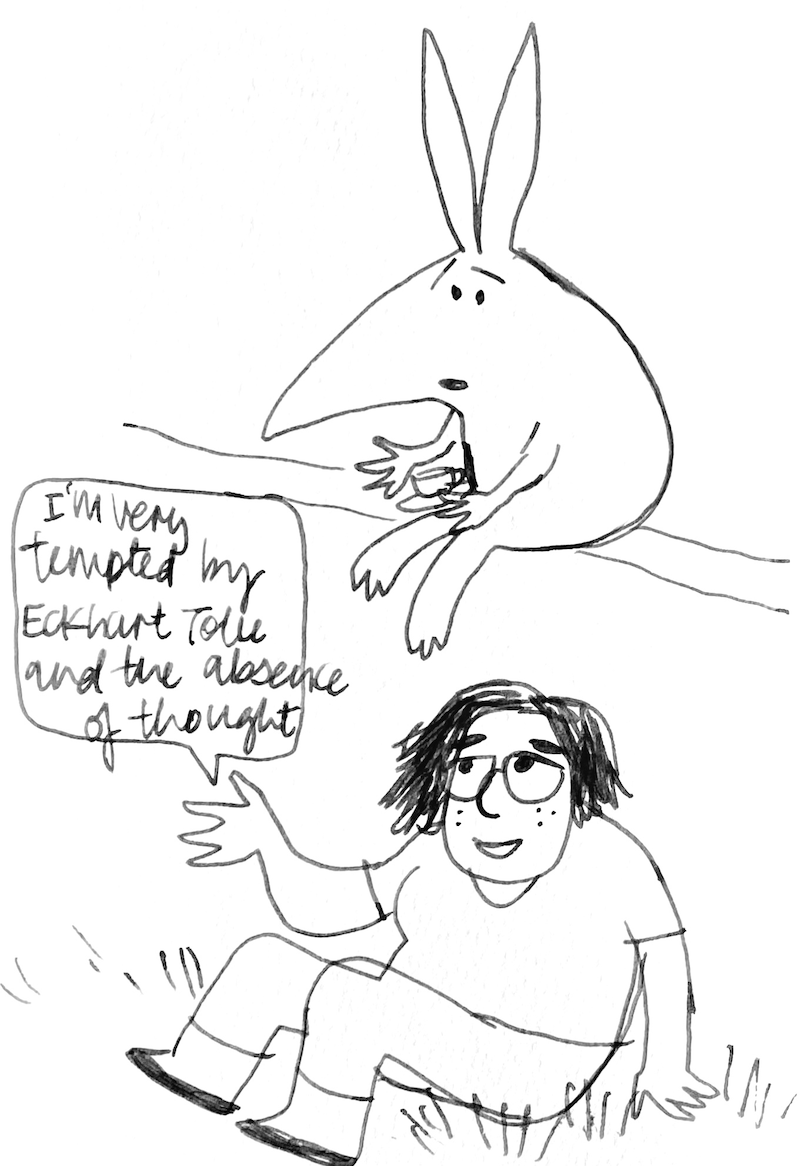
“I’m very tempted by Eckhart Tolle and the absence of thought…”
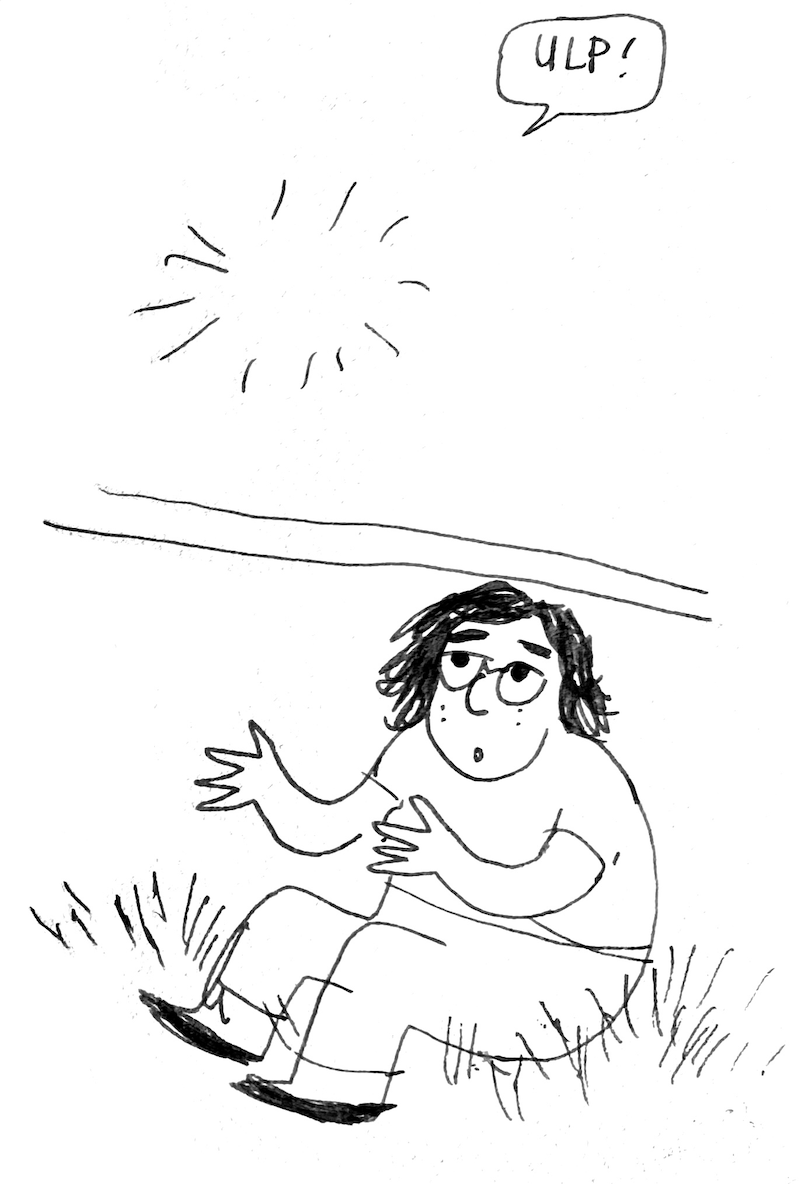
“Ulp!”
One of the things of being a parent is that you have to spend time with your kids. Lucky for you if they are entertaining. As in years past, our tornado still takes forever to eat a meal so I use the time to draw. It’s great to have a living breathing human being at close quarters to draw from! Between mouthfuls, we chat.


Sometime in August I was making notes for my DesignUp talk, and thinking about “belonging” when Orin chimed in:
“You belong to your parents, but you live with us!”


“Do you know centipedes lived in the time of dinosaurs?”


“Do you know what a sundial is?”
I don’t know what he thinks of us…
Here they are watching the FIFA World Cup, and the brown boy thinks this is the best drawing of him that I’ve done since 2003. That drawing is actually hanging on my MIL’s fridge I think.

Here we were discussing our best movies/TV shows of 2022. The brown boy chose Better Call Saul, while mine was Dune, and the tornado chose Sonic the Hedgehog 2.

At least one of you drew me!
We’ve created a monster, I say…
In 2022 I didn’t read as many but I read widely.

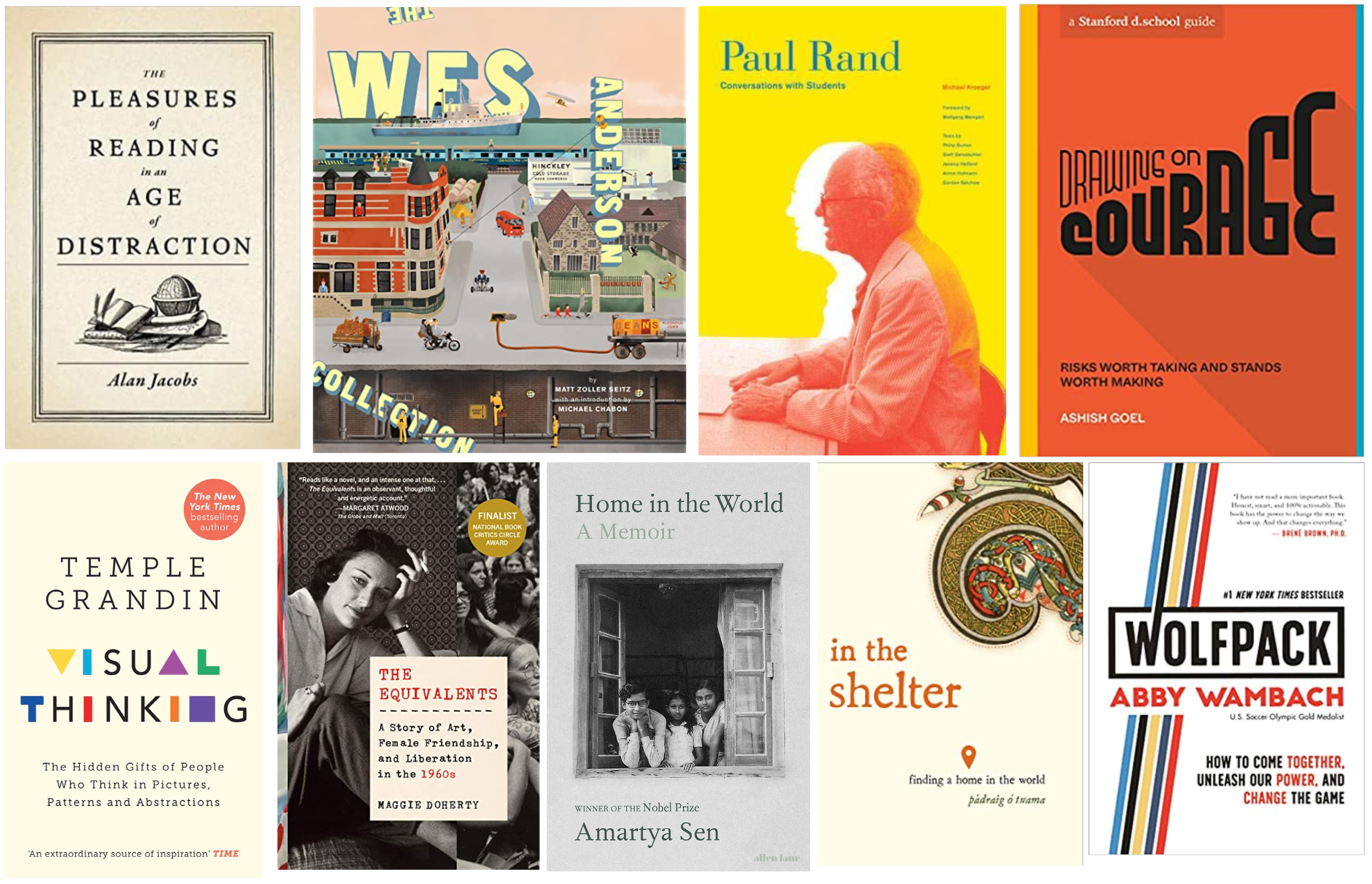
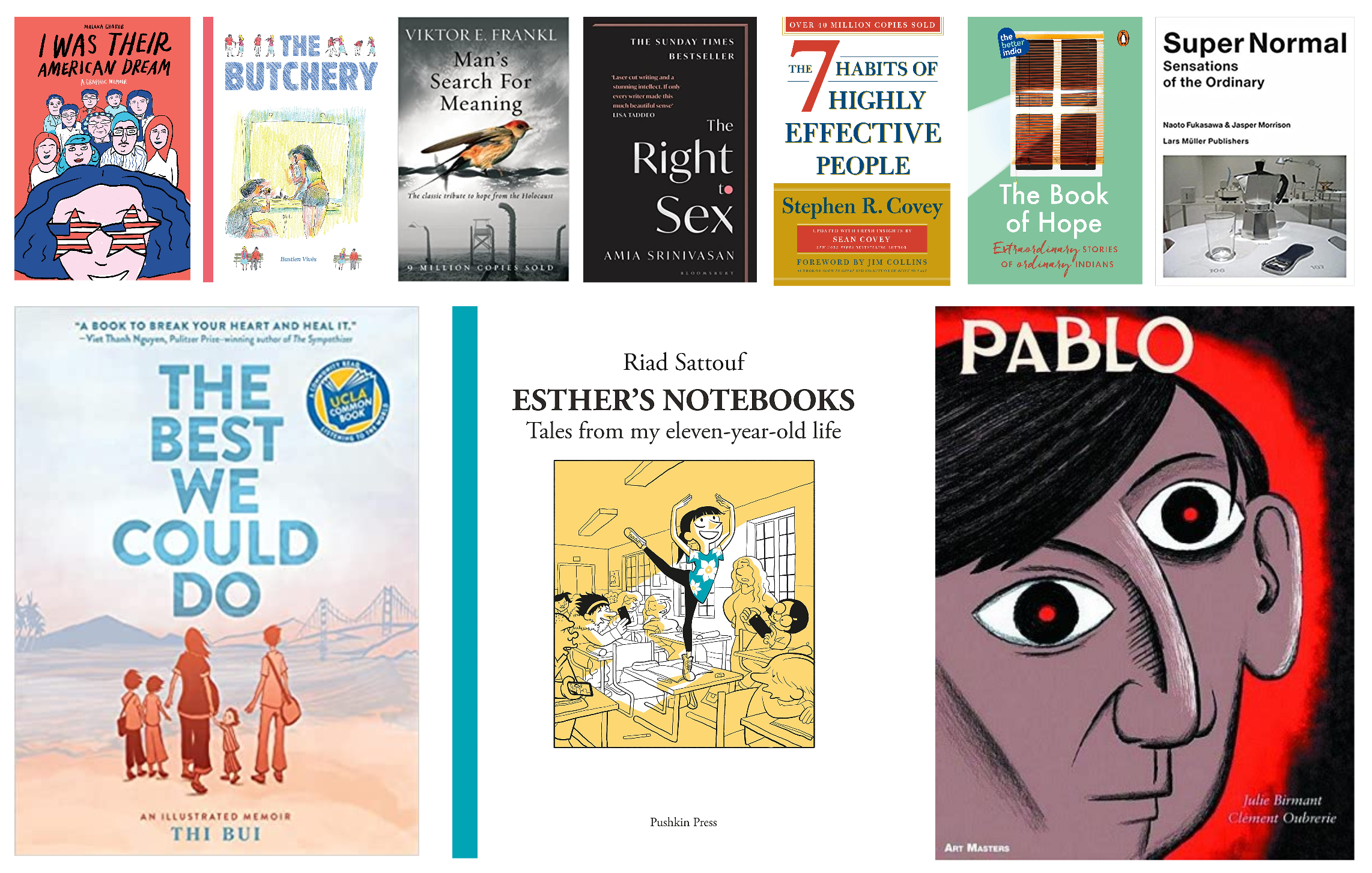

If I had to choose themes –
^, The Brand Gap^, Paul Rand Conversations with Students, Drawing on Courage*, Super Normal*^ ^, Tell me How to be, Carrie Soto is Back^, The Seven Husbands of Evelyn Hugo, The Christie Affair, Bright Lines, অগ্নিসম্ভব and অগ্নিকুসুম*^, Esther’s notebooks, The Best we could do, I was their American dream, The Butchery^^^, I hope this finds you well^, The Book of Hope *These books were life-changing – impacting the way I thought about myself, the world, how I live and work, what I choose to do
^These books were excellent. Some of them I gave as gifts to others, and I would probably re-read later in life.
We took an overnight train from Cairo and went to Aswan. From there, a felucca took us to Kato Dool, a resort in a Nubian village. On the way the felucca broke down in the backwaters of the Nile (sketch below) but luckily all the crocodiles in the Nile had either been mummified or left out in Sudan.


There was a wedding going on in the Nubian village that night and it was rather crowded. The brown boy almost got caught in a camel stampede during the wedding procession!
Finally, the ancient ruins of Egypt began…we took a Nile river cruise, and drifted down the Nile, stopping to visit the ancient ruins as we arrived at the sites. First, we visited the Philae temple, our first glimpse of imperial grandeur on the banks of the Nile. Here’s the David Roberts painting of the wonderful colors of the pillars.

This wonderful itinerary had been devised by Mishta, who even managed to squeeze us in for a lunch at the Old Cataract hotel, where Agatha Christie had stayed, writing her Egypt novels!


From Aswan we took the 3 hour long drive over miles of Sahara desert to visit Abu Simbel. I have never seen anything like the majesty of that temple. Rameses not only succeeded in convincing the god and the Nubians of his might, he almost convinced me too, nearly 3000 years later! It’s a massive Santa letter to the god Ra Horakhty asking for more power and wealth, and in case the god forgets, the inside walls of the temple are covered with details of his request.
In between the historic ruins, we chilled out on the river boat, drawing the countryside that passed and some of our fellow passengers as they sunbathed.


I skipped Kom Ombo (and the crocodile mummies!) but saw Edfu and of course the Karnak temple in Luxor, the most magnificent of all the ruins. It was too much to draw, all that imperial majesty, transferring down across centuries to transfix us in our present. We could barely think of the past and future, we were so caught up in the sense of place of these ruins.


Finally the last site we visited was the Valley of Kings. On the way we saw the fabulous ruins of the Colossi of Memnon. In my humble opinion, at some point, the pharaohs realized that it was more cost-effective and scalable to build their tombs in a conveniently located, pyramid-shaped mountain instead. All the tombs were brilliant and beautiful. I was awe-struck at the colors and the massive systems that kept the same consistency of output, and the sheer volume of labor that pulled it off across centuries!

Throughout our fortnight in Egypt, these were the insights I took away about ancient Egypt –
 inktales